

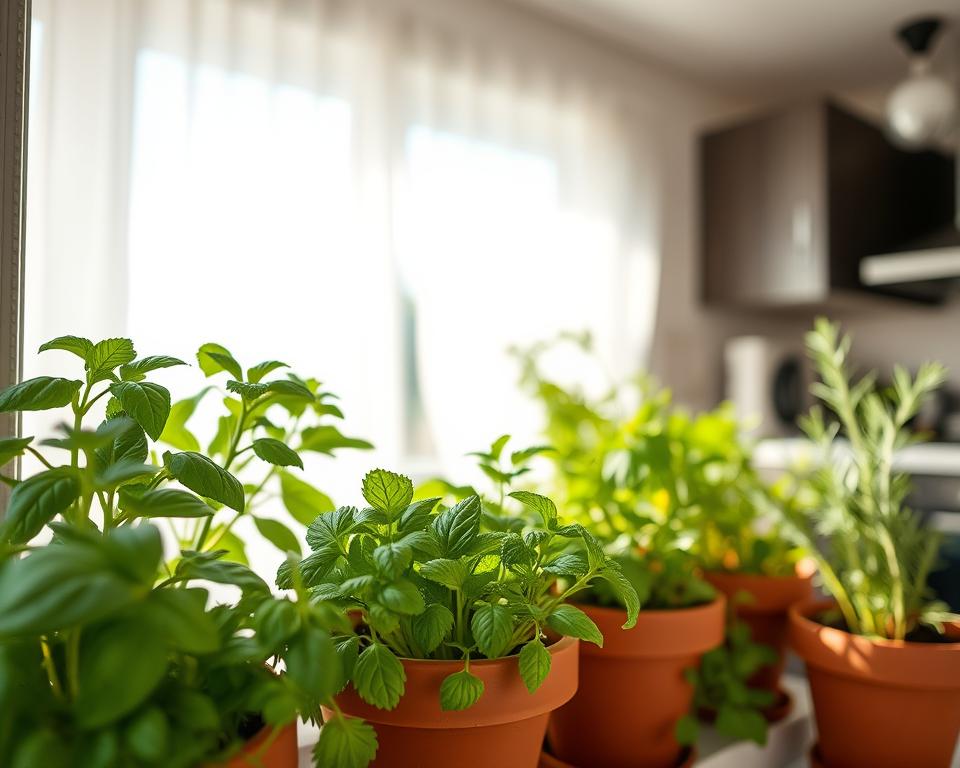
A sunny windowsill can make a small kitchen a useful window herb garden. You need no yard or balcony; a few pots can help you begin growing fresh herbs.
For small-space herb growing, choose herbs that match your available light and care. Harvest fresh kitchen herbs for tea, sauces, salads, and everyday meals.
Key Takeaways
- A bright window can support a useful herb garden.
- Start with just a few pots.
- Choose herbs to match your available light.
- Harvest leaves as you need them.
- Add more herbs as you gain confidence.
Choose a window with enough light
Indoor herbs need steady light, but a window’s direction offers only a starting point. Watch the spot at different times for two days before choosing it. This helps you understand the window herb garden light in your home.
South- and west-facing windows
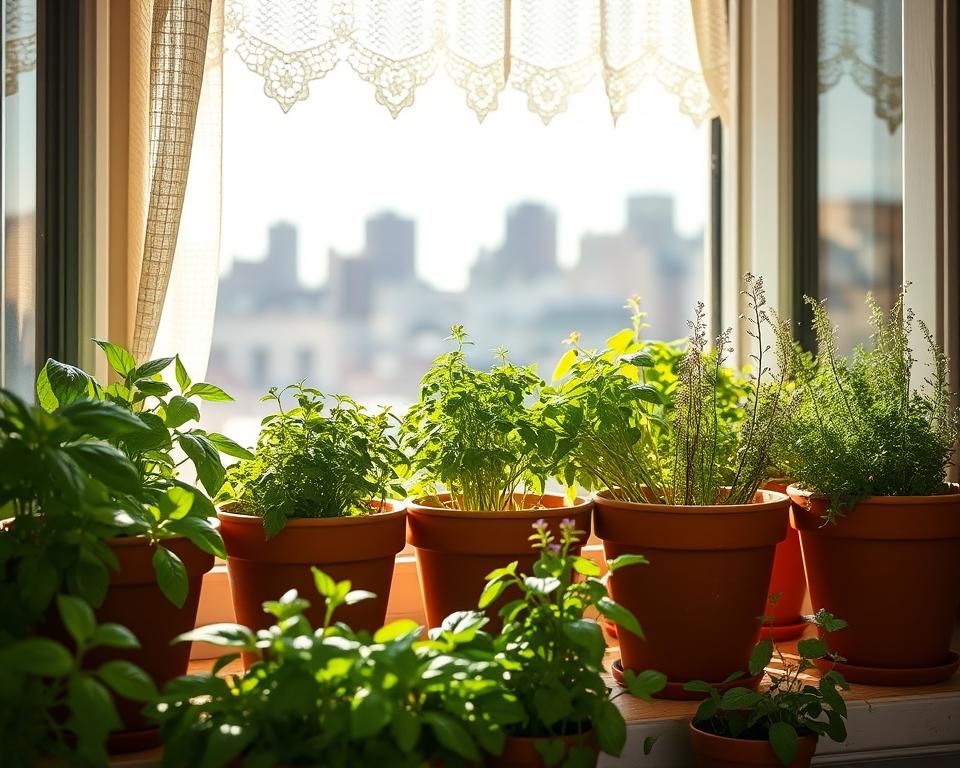
South-facing windows often provide long hours of sunlight for culinary herbs, while west-facing windows bring strong afternoon rays. These rays may heat leaves or dry soil quickly. If the sun feels harsh, hang a sheer curtain; morning sun for herbs is gentler than intense afternoon light.
East- and north-facing windows
East-facing windows get mild morning light, while north-facing windows seem dimmer; check actual room light before placing pots. Herbs need fresh air; open the window briefly when weather allows. Damp air can encourage fungus on leaves and soil.
Pick herbs that can thrive indoors
Match herbs to your window’s light and moisture. Start with a few types, watch them grow, then adjust.
Easy herbs for sunny windows
Rosemary, thyme, oregano, and sage suit bright spots. These herbs for sunny windows need light and well-drained soil.
Let the soil dry a bit between waterings. Basil also needs plenty of sun; in dark spots, stems may stretch and leaves can lose aroma.
Herbs for lower-light spaces
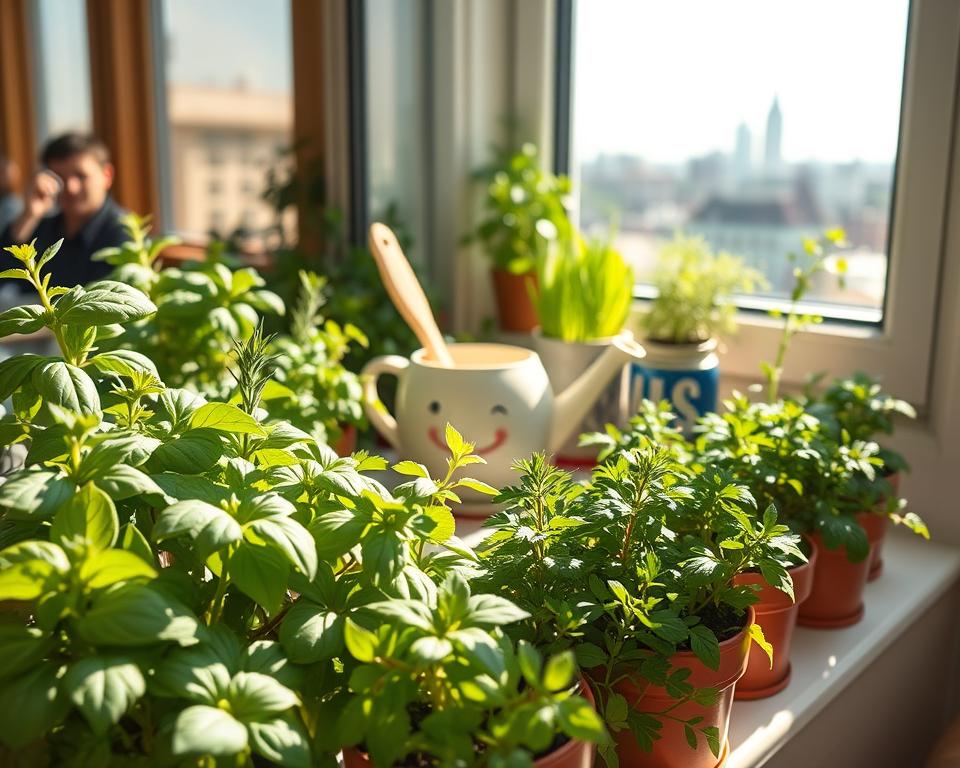
Chives and mint handle partial shade, while parsley does well with gentle morning sun. These herbs for lower-light spaces still need natural light to grow well.
For mint for a windowsill, use a separate pot. It spreads fast and can crowd nearby plants.
Decide between seeds and starter plants
Herb seeds or starter plants can both work in a beginner herb garden. Choose based on your time and how hands-on you want to be.
When seeds make sense
Seeds cost less and offer more variety. Try them after you understand your herbs’ light and watering needs. Start with just a few pots to learn each plant’s routine.
When starter plants save time
Starter plants skip delicate early growth, making them a simple choice for easy indoor herbs. You can see growth sooner and enjoy fresh leaves while learning plant care.
Choose containers that fit your windowsill
Measure the sill before shopping. Choose pots for a windowsill herb garden that sit securely and give each plant room to grow. A row of narrow pots can work better than one wide planter.
Match pot depth to the herb’s roots. Parsley needs a deeper container, while chives grow well in a shallower one. Rosemary needs more soil so its roots can spread.
On a narrow sill, wall-mounted planters make vertical growing in small spaces easier. Keep mint in its own pot; its fast-spreading roots can crowd nearby herbs. Choose containers for culinary herbs with enough room for healthy roots and steady growth.
| Herb or setup | Container choice | Why it works |
|---|---|---|
| Parsley | Deep pot | Gives its roots room to grow down. |
| Chives | Shallow pot | Its roots need less depth than parsley’s. |
| Rosemary | Roomy pot | Provides more soil for roots to spread. |
| Mint | Individual pot | Helps keep spreading roots from crowding other herbs. |
| Narrow windowsill | Wall-mounted pots | Uses vertical space and frees up sill area. |
Add drainage without damaging the window
Choose pots with drainage holes so extra water can escape instead of pooling around herb roots. Place each pot on a saucer to protect the sill, then empty it after watering.
Water slowly until a little water flows from the holes. This moistens the soil while helping with preventing standing water. Avoid pots without drainage; trapped water can deprive roots of air and harm the plant.
Fill pots with a light, well-draining mix
Skip garden soil in indoor pots. It can pack down, trap water, and leave roots with little air. Choose a potting mix for aromatic herbs that drains freely.
A blend of coconut coir and potting soil holds moisture while letting extra water escape. Rosemary, thyme, oregano, and sage prefer light well-draining soil. Basil, chives, and parsley grow well in richer soil with organic matter for herbs.
A thin bark layer can slow water loss and limit soil splashes during watering.
Arrange herbs to make the most of a small sill
Group herbs by soil and water needs, not in one pot. Arranging herbs by watering needs makes care easier and helps plants thrive. Rosemary, thyme, oregano, and sage prefer dry soil, while basil, chives, and parsley need steady moisture.
Keep mint in its own pot because it spreads fast and can crowd nearby herbs. For vertical growing in small spaces, try wall-mounted pots above the sill. They add room for plants without taking up counter space.
A few well-placed pots can turn a narrow ledge into a compact kitchen herb garden. Leave space between plants for airflow and easy watering.
Plant each herb at the right depth
When planting herbs in pots, follow the depth listed on the seed packet or plant label. Set starter plants at their original soil level. Deeply buried stems may rot.
Parsley grows a long root, so choose a deeper pot for room. Check parsley pot depth when choosing a container. Avoid crowding its roots in shallow, tight pots.
Chives and parsley are compatible herbs in one container if they have enough room and similar watering needs. Keep mint in its own pot because spreading roots can crowd nearby herbs.
Water when the soil—not the calendar—says it is dry
Water newly planted herbs until extra water runs from the pot’s drainage holes. In your herb watering routine, check the soil instead of following a fixed schedule.
Push your finger into the soil to your first knuckle. If it feels dry, water the plant. If it feels moist, wait and check again later; this simple habit of checking soil moisture helps prevent soggy roots.
Basil, parsley, and chives like steady moisture, but their roots should not sit in water. Watering basil and parsley may be more frequent than watering herbs that prefer drier soil.
| Herbs | When to water |
|---|---|
| Basil, parsley, and chives | Water when the top layer feels dry; keep the soil lightly moist. |
| Rosemary, thyme, oregano, and sage | Let the soil dry between waterings. |
In cold weather, soil dries more slowly, so check before watering and water less often. Yellow, soft lower leaves can signal too much water. Wilted leaves with hard, dry soil may mean the plant needs a drink.
Prune, feed, and harvest herbs so they keep growing
Pruning fresh herbs encourages new shoots and prevents crowded growth. Take a few leaves or stems at a time, leaving most of the plant intact.
For chives, snip the outer leaves and leave the center growing. Pick parsley stems near the base, and pinch off basil flowers to support leaf growth. These small cuts support harvesting herbs for continued growth.
After a few weeks, refresh the soil with worm castings or Bokashi. When feeding potted herbs with other organic fertilizers, follow package directions.
| Herb | What to cut | What to leave |
|---|---|---|
| Chives | Outer leaves | Center growth |
| Parsley | Outer stems near the base | Inner stems and leaves |
| Basil | Leaf tips and flower buds | Several healthy leaves on each stem |
Solve common window herb garden problems
Small changes to light, water, and air can help herbs recover. When diagnosing indoor herb problems, inspect leaves and soil before changing your routine.
Leggy stems and pale leaves
Stretched stems and pale leaves often show that herbs need more light. Move the pot to a brighter window, and turn it sometimes for even growth. More water will not solve low light.
Yellow leaves and soggy soil
Yellow, soft leaves near the base may mean the soil stays too wet. Check the soil before watering, and empty the saucer after each drink.
Wilted leaves with hard, dry soil may need water. A musty smell can signal excess moisture and poor airflow for potted herbs.
Fungus gnats and other indoor pests
Check leaves and soil often to spot pests early. For pest control for edible plants, use only products labeled for herbs or food crops, and follow the label closely. Briefly open a window when conditions allow; moving air can help keep leaves and soil from staying damp.
| What you notice | Possible cause | What to check |
|---|---|---|
| Long, pale stems | Not enough light | Window brightness and plant position |
| Yellow, soft lower leaves | Soil staying too wet | Moisture below the surface and standing water in the saucer |
| Wilted leaves and firm soil | Soil may be too dry | Whether the potting mix feels dry to the touch |
| Musty soil smell or visible pests | Excess moisture or an indoor pest issue | Soil condition, leaves, and air movement |
Start with a few pots and expand as your herbs grow
Starting a window herb garden takes little room. Begin with four pots to learn how light, airflow, soil, and watering affect each herb.
For a simple small herb garden plan, choose plants you cook with often. Harvest only what you need, then add pots after learning each herb’s needs to thrive.
Growing fresh herbs at home lets you pick a few leaves while cooking. Enjoy them at their best and avoid buying a large bunch that may go to waste.




