

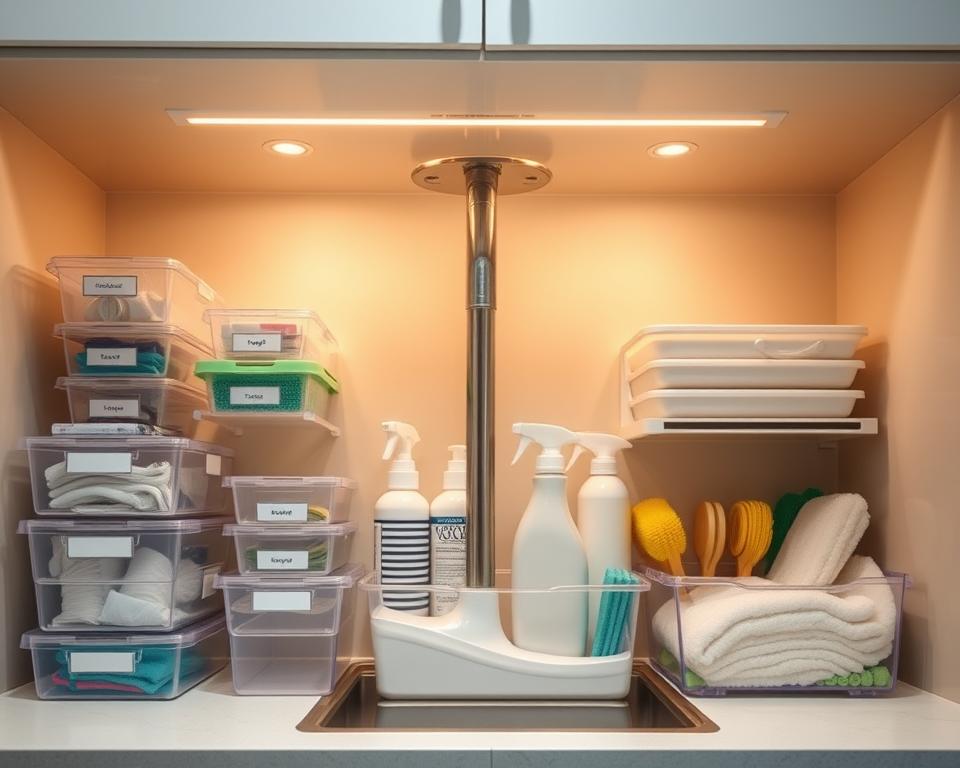
Under-sink organization starts with the pipes, which may take more room than your stored items. This small cabinet can hold much more when you plan around its shape.
Good kitchen storage makes limited space under the sink easier to use. A few simple changes support clutter prevention without a costly remodel.
Key Takeaways
- Use the space around pipes, not just the open floor.
- Choose simple storage that fits your cabinet.
- Keep daily supplies easy to reach.
- Small changes can make a crowded cabinet more useful.
- A quick reset helps prevent clutter from returning.
Empty the cabinet and sort what actually belongs under the sink
Take everything out and group it by use. Personal organizer Juçara Monaco notes that the space beneath a kitchen sink can collect many household items.
Keep only what you use there, and move the rest to a better spot. Clear shelves make clutter easier to spot before you choose a cabinet organizer.
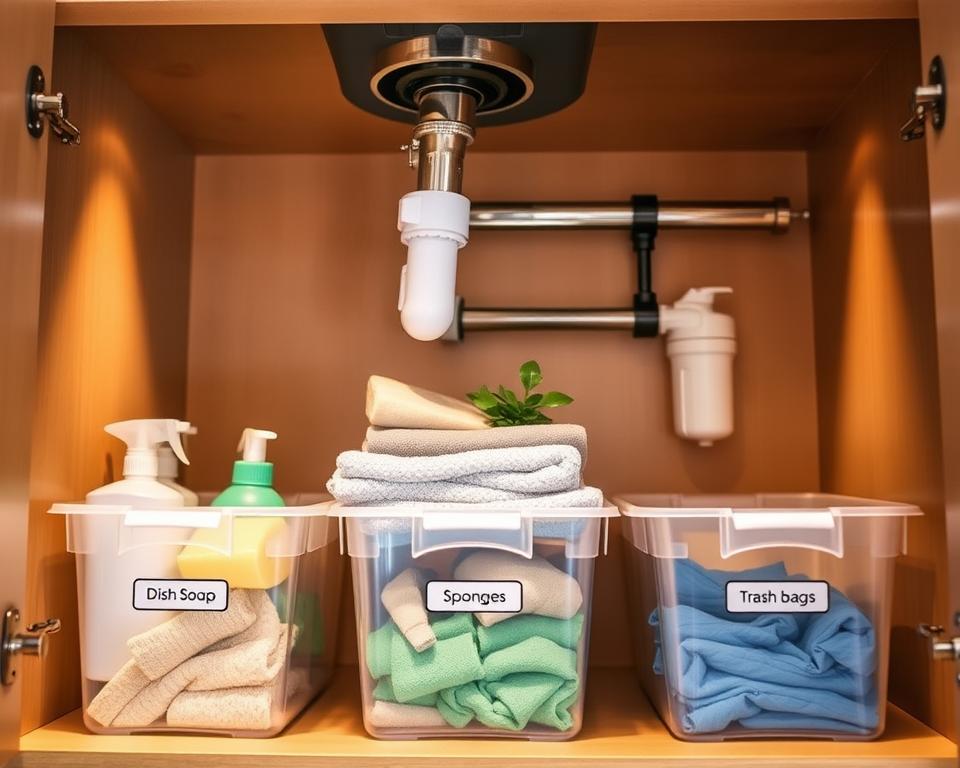
Try sorting storage into three groups: keep, relocate, and discard. Check each item for leaks, expired products, or damaged packaging. This gives your kitchen cabinet organization a practical start, so bins and racks hold useful supplies, not extra clutter.
Use jars to contain small items that belong in the cabinet. Glass or plastic jars can keep silverware grouped and easy to find, as Monaco recommends. Choose a storage spot based on what you truly need close at hand.
Measure around the plumbing before buying organizers
Measure the cabinet’s width, depth, and height. Also measure the space used by the drain and water lines. These under-sink measurements show which bins or shelves fit without blocking access.
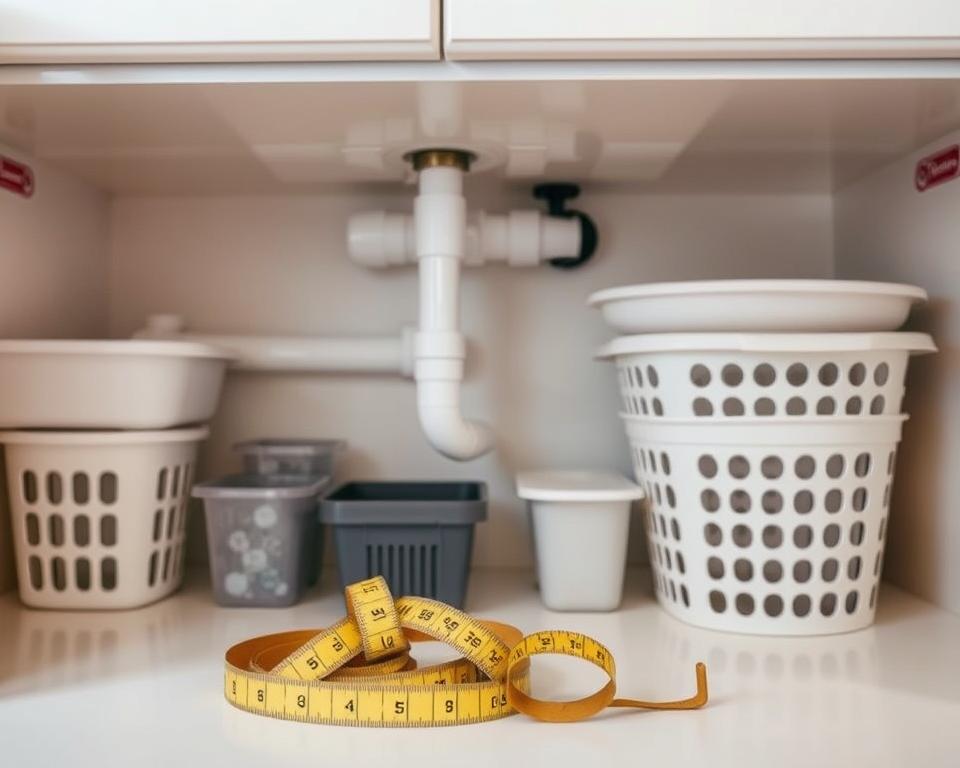
Leave enough pipe clearance for the siphon and shutoff valves. A made-to-measure shelf can fit around the siphon, with its width set to fit the cabinet above. This design supports smart plumbing organization without wasting space.
Before drilling to mount a shelf, check where water pipes run inside the wall. A pipe detector can help prevent a costly puncture.
Choose storage that fits your cleaning supplies
Good cleaning supply storage keeps daily products close and backup items out of the way. Choose pieces that fit around the pipes and leave room to reach needed items.
Use pull-out bins for everyday products
Low pull-out bins make bottles easy to reach, even at the back of a deep cabinet. Keep your most-used products in one bin, with space for handles and lids.
Add a narrow caddy for brushes and sponges
A slim caddy can hold brushes, sponges, and small tools without using much floor space. Hooks can keep a few lightweight items off the cabinet base.
Store backup supplies in labeled containers
Place extra soap, trash bags, and other refills in labeled containers. Grouping backups makes them easy to spot and helps prevent duplicate purchases.
Make room for awkward pipes and deep corners
Work around the siphon instead of letting it waste cabinet space. Custom shelving can fit around pipes and keep bottles within reach. This space optimization makes awkward corners more useful.
Adjustable, ready-made shelves offer a simple choice when custom shelving is not practical. Set them to fit open areas for storage around pipes, leaving room to reach shutoff valves and check for leaks.
A low rolling rack can slide beneath the sink and move out when needed. Sealed wooden crates or plastic produce crates can hold cookware and other kitchen items. Choose a size that leaves clear access to the pipes.
Use vertical space on the cabinet doors and walls
Once the floor is clear, look up. Cabinet doors and free walls offer vertical storage for light items without using bin space.
Hang spray bottles from a tension rod
Fit a short tension rod across the cabinet, away from pipes and doors. Hang spray bottles by their trigger handles, leaving space for easy access. Hooks and rods can hold other light tools, too.
Add adhesive racks for small cleaning tools
Use adhesive racks or hooks for brushes, gloves, and sponges. Clean and dry the surface first, then follow the product’s weight limit. This wall-mounted storage keeps small tools visible and off the cabinet floor.
| Storage spot | Good for | Check before installing |
|---|---|---|
| Tension rod | Spray bottles and light tools | Door clearance and pipe access |
| Adhesive rack | Brushes, gloves, and sponges | Surface condition and weight limit |
Keep leaks, chemicals, and trash bags under control
Add a waterproof lining to the cabinet floor to guard against small drips. Check pipes often because lining cannot stop leaks. For leak protection around the opening, hang an oilcloth, waterproof fabric, or canvas curtain.
Keep cleaners sealed and upright, away from food items. Store trash bags in a dry, easy-to-reach place. A simple bin or wall-mounted holder keeps the roll from getting buried.
Wipe exposed items and the cabinet floor each day. Dust and food scraps can fall from the sink, so quick cleaning keeps moisture-resistant storage tidy.
Create easy-to-reach zones for daily and occasional items
Keep daily-use items near the front, and place occasional supplies farther back. This kitchen zoning approach makes accessible storage easier to maintain. A rolling rack on casters fits tight spots and moves out when you need to reach the pipes.
Interior designer Elaine Gonzalez recommends suspended blinds near the sink. Unlike curtains, they will not bunch in the corners. Use hooks on a rod or shelf to group hanging items, such as gloves and small tools.
Maintain an uncluttered cabinet with a quick reset routine
Add a quick cabinet check to your daily cleaning routine. Wipe spills, return each item to its zone, and toss empty containers. Check for leaks before closing the doors.
Open storage needs regular care, say organizer Juçara Monaco and designer Elaine Gonzalez. Dust and food scraps collect on exposed items, while clutter remains visible. Glass or plastic jars can keep silverware tidy on open shelves.
A few minutes of upkeep protects clutter-free storage and makes your organized kitchen easier to use.
Keep your under-sink storage practical and clutter-free
Practical under-sink storage starts with one simple habit: keep only what you use, and return each item to its spot. Clear bins, a quick reset, and space around the pipes make daily cleanup easier.
You can keep the area useful without a cabinet. Elaine Gonzalez of UMM Arquitetura suggests ready-made curtains or a DIY curtain hemmed with adhesive tape or hot glue. Use them to hide supplies.
For more affordable storage solutions, try bracket-mounted shelves, wooden or plastic crates, or a rolling cart. Repaint a cart to match your kitchen, and leave enough room to reach cleaning products and check for leaks.
These DIY kitchen organization ideas also work in small spaces. Choose what fits your sink, label backup supplies, and keep everyday items within easy reach.




