

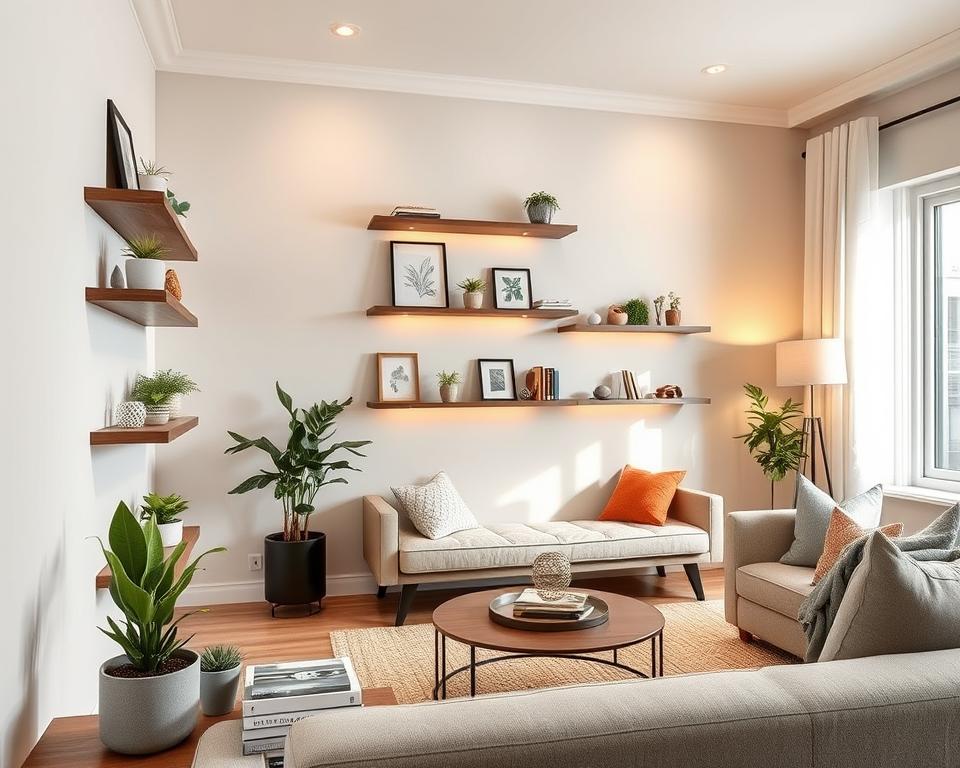
A wooden shelf can seem to float when its support hardware stays hidden from view. This clean look can make even a small corner more useful. Floating shelves display favorite objects, hold everyday items, and add warmth without using floor space.
Thoughtful floating shelf decor can turn blank walls into practical, personal spaces. Use vertical wall decor to finish an empty stretch or awkward corner while keeping the room open and uncluttered.
Key Takeaways
- Floating shelves add storage without using floor space.
- Hidden hardware creates a clean, minimalist look.
- A corner can become useful space for storage or display.
- Floating shelf decor can make blank walls feel more personal.
- Vertical wall decor helps a room feel finished without adding clutter.
Decide what each floating shelf needs to hold
Start with the shelf’s job: holding daily-use items, displaying keepsakes, or organizing an empty corner. A clear purpose guides floating shelf decor and helps prevent clutter.
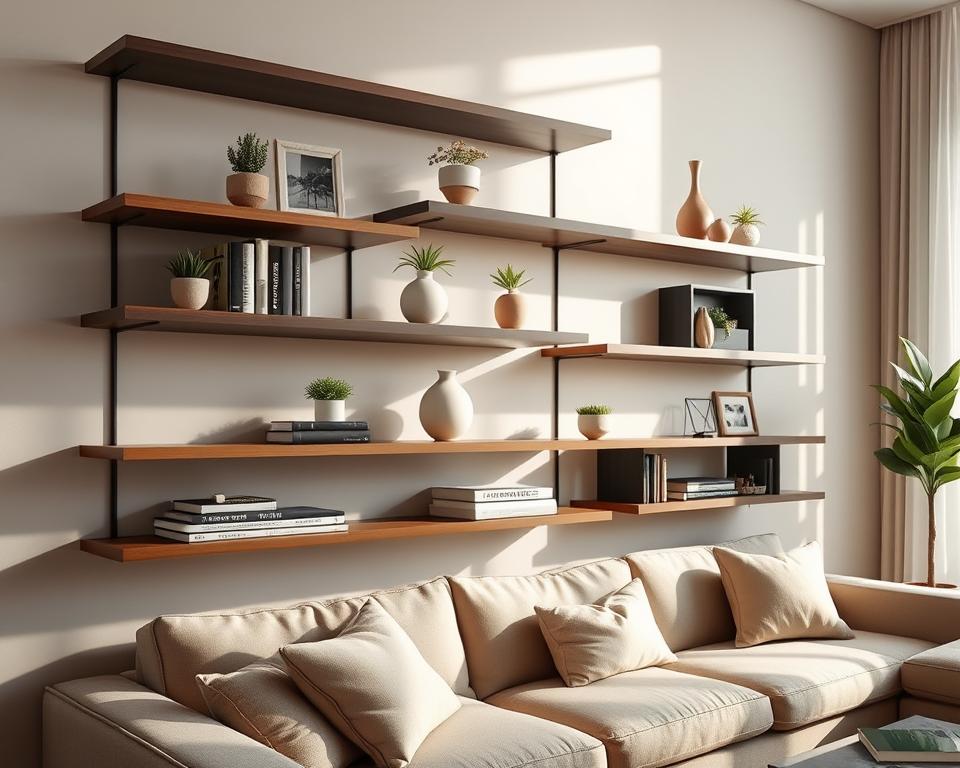
Group nearby items, then decide which objects belong together. Leave room for a few objects that add character while keeping the main items easy to reach. This simple method supports decorative object organization without making the shelf feel crowded.
Measure the wall before planning your shelf layout
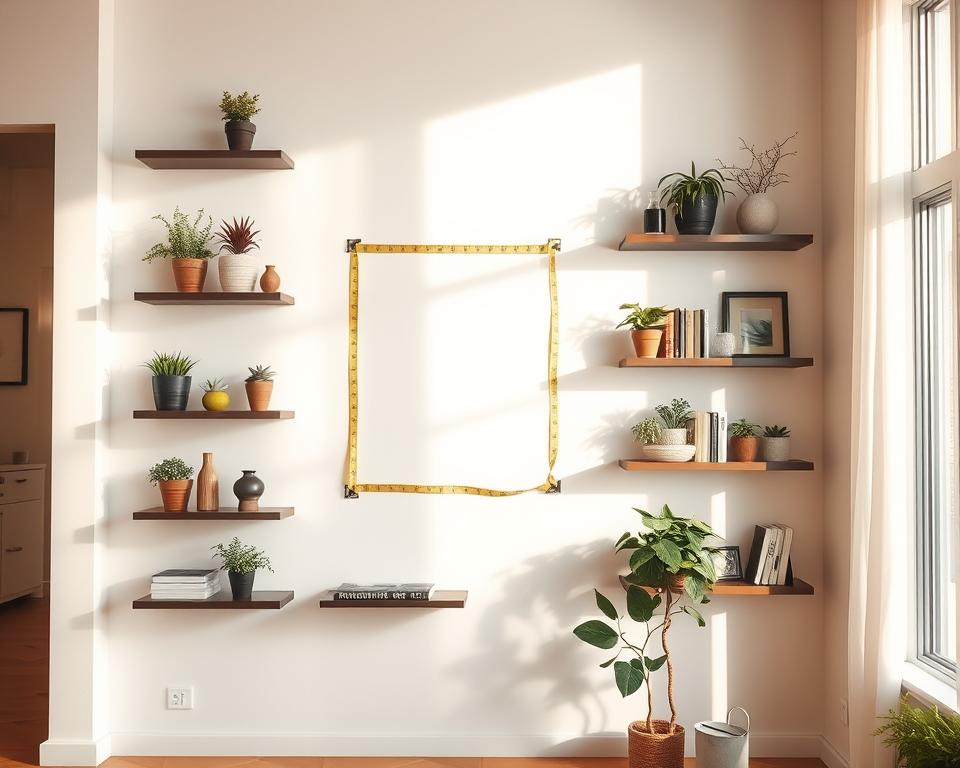
Measure the wall’s width and height. Note nearby doors, windows, outlets, and trim. These details help you plan vertical wall decor that fits without crowding the room.
Mark possible shelf positions with painter’s tape. Step back to check sightlines, walking space, and access to anything beneath the shelves. Before choosing a spot, consider the wall load capacity and planned storage items.
| What to measure | Why it matters | How to check |
|---|---|---|
| Wall width and height | Shows how much room the layout can use | Measure the clear wall area |
| Doors, windows, and trim | Helps prevent overlaps and blocked openings | Note their edges and swing paths |
| Nearby outlets and switches | Keeps shelves from covering useful controls | Mark their locations before planning |
| Wall type and planned items | Guides choices for secure mounting | Check the surface and estimate what each shelf will hold |
Choose shelf lengths that fit the wall and your belongings
Before choosing a shelf, group the items you plan to store. Place them side by side with a little space between each piece. This check helps prevent a cramped shelf or an oversized look.
Compare that layout with the clear wall space, leaving room near corners, doors, and windows. Wooden floating shelves can suit a long, open wall, while a shorter shelf may fit a narrow spot. Keep floating shelf decor sized to the shelf for a balanced display.
Match the shelf material and finish to the room
Wooden floating shelves give rooms a clean, simple look. Choose a finish that matches nearby furniture, floors, or cabinets.
Light wood helps small spaces feel open, while dark stain creates contrast against pale walls. For calm vertical wall decor, choose a simple grain and finish.
| Finish | Room effect | Pairs well with |
|---|---|---|
| Light, natural wood | Bright and relaxed | White walls and pale fabrics |
| Dark stain | Warm contrast | Light walls and dark accents |
| Painted wood | Clean and subtle | Cabinets or trim in a matching color |
Pick hardware that keeps floating shelves secure
Floating shelves hide their support, so choose hardware made for your shelf and wall. Concealed shelf brackets create a clean look, but the fit must be right. Check the shelf maker’s instructions before buying.
Find out what lies behind the drywall before planning installation. A stud or rated anchor can affect the wall load capacity. Follow the hardware and shelf limits instead of guessing the weight.
For drywall installation, use fasteners suited to the wall and planned load. If the instructions seem unclear, ask a qualified installer to check the setup.
Turn an entryway wall into everyday drop-zone storage
Give an entryway corner a clear purpose with floating shelf decor for keys, mail, and sunglasses. Use a small tray for loose items, and place gloves or dog leashes in a basket below.
Keep daily items within easy reach, but leave space for new items. Add a few hooks beneath the shelf for bags or coats, creating vertical wall decor without using floor space.
Make living room shelves useful without making them look busy
Wooden floating shelves hold useful items and give a living room a clean, finished look. Display only what you use or enjoy, and leave space between objects to prevent clutter.
Wooden floating shelves add warmth while keeping attention on a few favorite pieces. Simple decorative object organization helps you find what you need and refresh the display over time.
Put kitchen and bathroom walls to work
Floating shelves can turn an unused corner into useful storage. Keep often-used items nearby, then add a few chosen pieces as vertical wall decor.
Store spices, dishes, and cooking essentials in the kitchen
Place spices and cooking tools near the prep area. Keep dishes on an easy-to-reach shelf, with space between items for quick access and simple decorative object organization.
Organize toiletries and towels in the bathroom
Use shelves to keep toiletries together and folded towels within reach. A basket can group small items, while open space keeps the display calm and easy to clean.
| Room | Useful shelf items | Placement tip |
|---|---|---|
| Kitchen | Spices, dishes, cooking tools | Keep daily items near the prep area |
| Bathroom | Toiletries, folded towels, small baskets | Place essentials within easy reach |
Style shelves with a practical mix of storage and decor
A useful shelf holds daily items and still feels personal. Mix practical pieces with decor, and give each object room to stand out.
Combine books, baskets, plants, and personal objects
Stack books in short piles or line them beside a small plant. Baskets hide cords, keys, and other loose items. Create a composition of framed art and books: lean one frame behind a few books, then add a favorite keepsake.
Group small items on a tray to make decorative object organization simple. Keep heavier books and storage baskets on shelves with sturdy support.
Leave enough empty space to keep the arrangement balanced
Resist filling every inch. Open space gives the eye a place to rest and makes it easier to reach the things you use. If a shelf feels crowded, remove one item or shift a group to another spot.
| Shelf item | Useful role | Styling tip |
|---|---|---|
| Books | Reading and display | Mix upright rows with a short stack |
| Basket | Hides small daily items | Leave the opening easy to reach |
| Plant | Adds color and texture | Choose a size that leaves room around it |
| Framed art | Adds a personal touch | Lean it behind a small group of objects |
Keep floating shelves safe, tidy, and easy to update
Check concealed shelf brackets regularly for loose hardware, sagging, or cracks. Keep heavy items near the brackets, and avoid fragile objects that could fall. Follow the maker’s care and weight guidance.
For drywall installation, use hardware suited to the wall and shelf system. Never guess the wall load capacity; check product ratings and get help if the setup feels loose or uncertain.
Clear away dust and rotate decor as your needs change. A quick check keeps the display neat and helps you spot wear early.
Make your walls work harder with a simple shelf plan
Start your shelf plan with the items you need to store. Measure the wall, select shelf lengths that fit, and choose sturdy hardware for each load. This keeps daily items nearby and helps shelves stay secure.
Use wooden floating shelves for useful storage without a bulky look. In an entryway, kitchen, or bathroom, place needed items within easy reach. In a living room, combine books and baskets with a few personal touches.
Thoughtful floating shelf decor adds order while giving your eyes room to rest. A clean layout makes vertical wall decor look polished. Your walls become useful without feeling crowded.




