

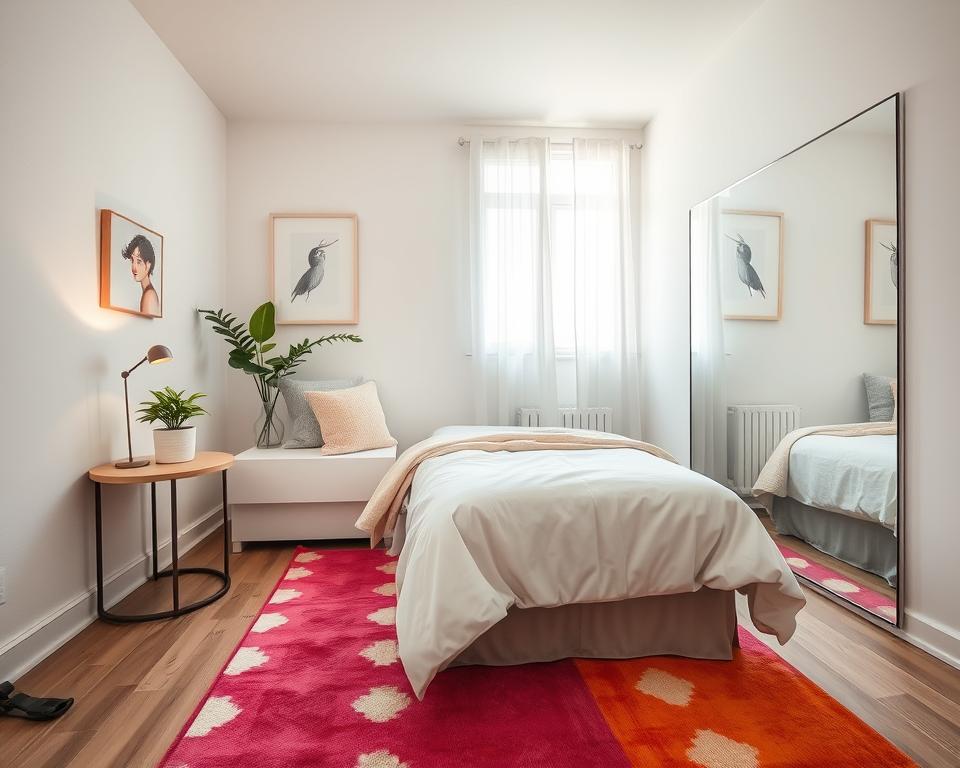
A small bedroom can feel larger without gaining a single square foot. The right layout, light colors, and smart storage open the room while keeping it comfortable and personal.
Good small bedroom decor begins with choices that reduce visual clutter. These small bedroom design tips and bedroom space-saving ideas help you use every inch.
Key Takeaways
- Keep walking paths clear.
- Choose furniture that fits the room.
- Use storage to reduce clutter.
- Let natural light reach the room.
- Add personality with a few well-scaled accents.
Start with a layout that keeps the walking path clear
Study the room’s footprint before moving anything. Plan a direct route from the doorway to the bed and closet. This clear walking path makes daily routines easier and keeps a small bedroom layout from feeling crowded.
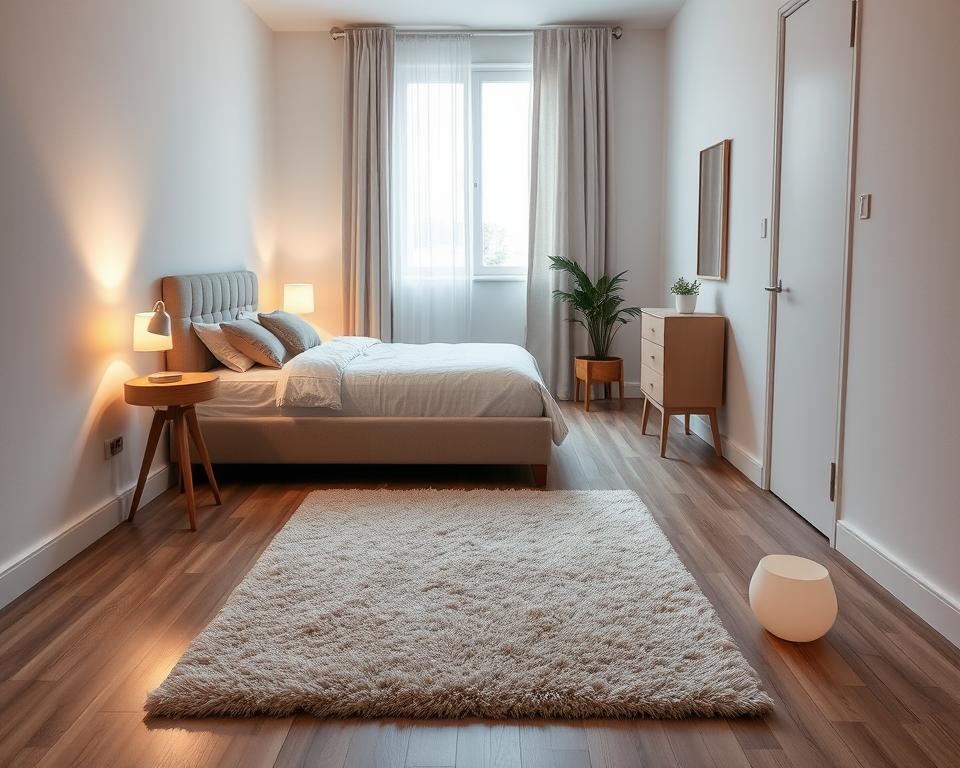
Place the bed and other large pieces first. Open closet doors and furniture drawers to check that they do not block the route. A space-saving bedroom arrangement leaves room to move and uses the floor area well.
| Check | What to do | Why it helps |
|---|---|---|
| Main route | Keep a direct path between the doorway, bed, and closet. | Makes it easier to move through the room. |
| Large furniture | Place the bed and other big pieces before smaller items. | Helps the layout work around the room’s footprint. |
| Doors and drawers | Open each one and confirm it does not block the path. | Keeps storage easy to use every day. |
Which colors make a small bedroom feel more open?
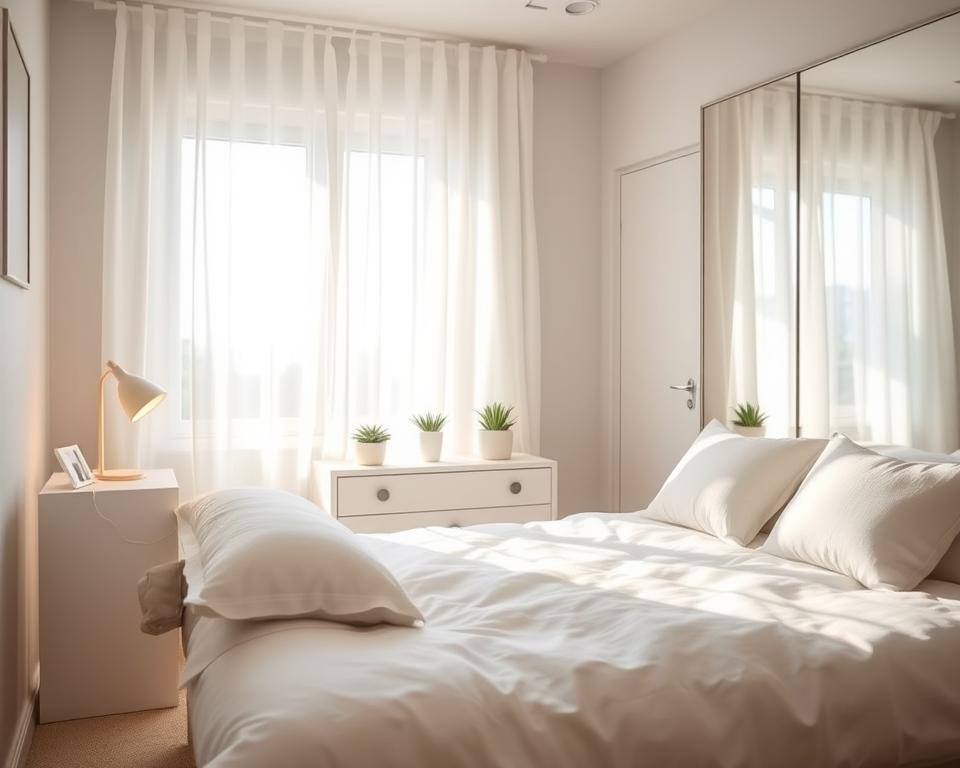
A light color palette can make a small bedroom feel airy. Try soft white, pale blue, or warm gray on the walls. For bedroom paint colors, choose a shade that suits natural light and the pieces you plan to keep.
Use a simple scheme for walls, bedding, and larger furnishings. Keep the biggest surfaces close in tone, then add contrast with a pillow, throw, or small accent. These small room color ideas can create a calm space without making every item match.
| Surface | Color approach | Example |
|---|---|---|
| Walls | Choose a soft, light shade | Warm white |
| Bedding | Repeat the wall’s undertone | Cream or pale blue |
| Larger furniture | Keep the finish quiet | Light oak |
Choose furniture that fits the room’s scale
Choose small-scale bedroom furniture for the usable floor area, not just appearance. Leave a clear path around the bed for easy movement.
Pick the right bed size
Compare the bed’s footprint with the open floor space. A bed with walking room on each side makes the bedroom easier to use.
Replace bulky nightstands
Swap wide tables for compact nightstands or a narrow wall shelf. Both hold daily essentials while using less floor space.
Use furniture with more than one purpose
Look for multifunctional furniture, such as a storage bench at the foot of the bed. These pieces add storage without crowding the room.
Where should the bed go in a small bedroom?
For smart small bedroom bed placement, check the doors, windows, closet, and main walking route first. The best spot depends on the room’s shape and openings, not one fixed rule.
Test the bed in several positions before choosing your bedroom layout. Make sure doors open fully and closet items remain easy to reach. Good bed positioning lets you walk around the bed without squeezing past furniture.
| Check | What to look for |
|---|---|
| Doors | Keep the entry and closet doors clear when they swing open. |
| Windows | Avoid blocking access or making the window hard to open. |
| Walking route | Leave a clear path from the door to the bed and closet. |
Use hidden storage to keep surfaces uncluttered
Clear nightstands and dressers can make a small bedroom feel calm. Choose hidden bedroom storage that is easy to reach and does not block doors, drawers, or walking paths.
Make use of under-bed space
Slide labeled bins beneath the bed for off-season clothes, extra bedding, or shoes. A bed with built-in drawers makes under-bed storage easier to reach when space is tight.
Organize the closet more efficiently
Group clothes by type, and use slim hangers to free up room. Add a shelf or small bins for folded items and accessories. A simple system makes clothing organization easier to maintain.
Add storage to unused wall space
Install a narrow shelf or a few hooks for books, bags, and everyday items. Keep wall storage easy to reach, and leave space around doors and furniture for a clear path.
How can vertical decor draw the eye upward?
Use wall-mounted shelves to lift books, plants, or a small lamp off the floor. This vertical space utilization keeps the room open and adds useful display space. Place shelves above a desk or beside the bed, clear of doors and walking paths.
Tall cabinets and narrow bookcases provide vertical bedroom storage without using much floor space. Secure tall pieces to the wall, leaving room for drawers and doors to open easily.
Use tall bedroom decor, such as artwork in a vertical line, to guide the eye upward. Keep frames proportional to the wall. Place them where they cannot snag clothing or interrupt daily movement.
Use mirrors and natural light to expand the room visually
Mirrors can make a small bedroom feel brighter and more open by reflecting light and useful views. Plan mirror placement before hanging one, and keep the window clear so daylight reaches deeper into the room.
Place mirrors where they reflect light
Try placing a full-length mirror across from or beside a window. The best spot depends on the view and the room’s layout. A mirror that catches bedroom natural light can brighten a dark corner without using floor space.
For evening comfort, pair daylight with indirect lighting from a shaded lamp or wall light. This adds a soft glow without making the room feel crowded.
Keep windows visually unobstructed
Choose simple window coverings that open fully, and avoid tall furniture in front of the glass. Clear space around the window helps bedroom natural light spread through the room and keeps the view open.
Choose curtains, bedding, and rugs that add softness without bulk
Choose small bedroom curtains made from light fabric that lets daylight through. Hang the rod near the ceiling. Keep panels narrow enough to show some window glass.
Lightweight bedding adds comfort without making the bed feel heavy. A simple quilt or coverlet creates a neat look. It also makes the room’s shape easier to see.
Think about bedroom rug size before buying. A rug under the lower part of the bed can soften the floor. Leave a clear border of flooring around the room.
Add personality with a few carefully scaled decorations
Choose a few personal items, such as a framed photo or small vase. These small bedroom decor ideas let each piece stand out without filling every surface.
Match bedroom accessories to your available space. A small object can suit a narrow shelf, while scaled wall art should fit the wall without crowding it. Edit the display as needed, and leave space around each piece.
Avoid these small-bedroom decorating mistakes
Avoiding small bedroom decorating mistakes starts with checking the walking path before choosing a layout. A bed or dresser blocking the route can make the room feel tight and hard to use. Good furniture placement leaves enough space to move easily.
Choose pieces that fit the floor area. Oversized furniture can crowd the room and leave little space for daily tasks. Before buying, measure the spot and check that drawers and doors can open.
Do not fill every shelf, nightstand, or dresser top. Too many accents can add bedroom clutter and make useful surfaces harder to use. Display a few favorite items, with open space around them.
Pull the room together with the ideas that create the most space
Start your small bedroom decor plan by clearing the main walking path. Choose a bed and furniture that fit without crowding the room.
Add bedroom organization with under-bed bins, closet storage, or shelves on an open wall. These space-saving bedroom ideas keep everyday items close and surfaces clear.
Use light colors, open window space, and mirrors to reflect daylight. Soft bedding, curtains, and a rug add warmth without making the room feel heavy.




