

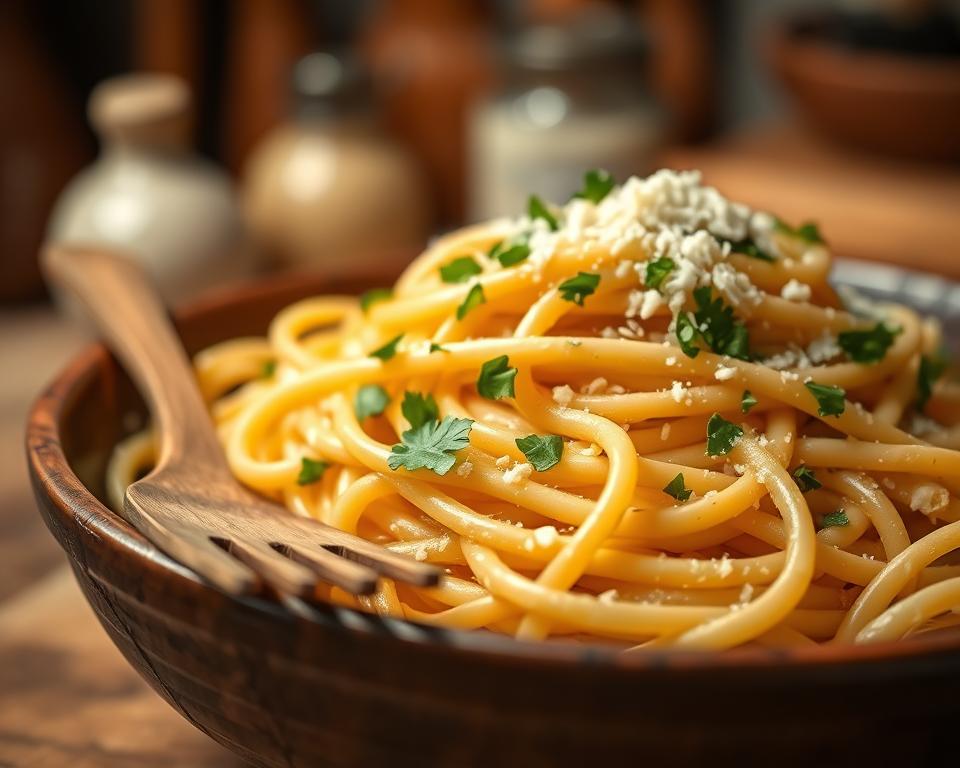
Use 250 grams of spaghetti to serve two or three people. Add four garlic cloves, four tablespoons of olive oil, and starchy pasta water.
These simple ingredients create a glossy, smooth sauce without cream.
This creamy garlic and oil pasta makes a quick spaghetti dinner with big flavor and little fuss. It offers a cozy take on creamy aglio e olio, using pantry staples and ready in minutes.
Key Takeaways
- Spaghetti, garlic, and olive oil form the base.
- Pasta water helps the sauce turn glossy and smooth.
- Four garlic cloves and four tablespoons of oil suit 250 grams of pasta.
- The recipe makes about two to three servings.
- No cream is needed for a silky finish.
Why pasta water makes garlic-and-oil pasta creamy
Pasta releases starch into its cooking water. This starchy pasta water helps olive oil cling to every noodle, making a smooth, glossy sauce instead of pooled oil.
As you toss the pasta, add water a little at a time. This movement helps form an olive oil and pasta water emulsion, giving the creamy garlic oil sauce a silky texture.
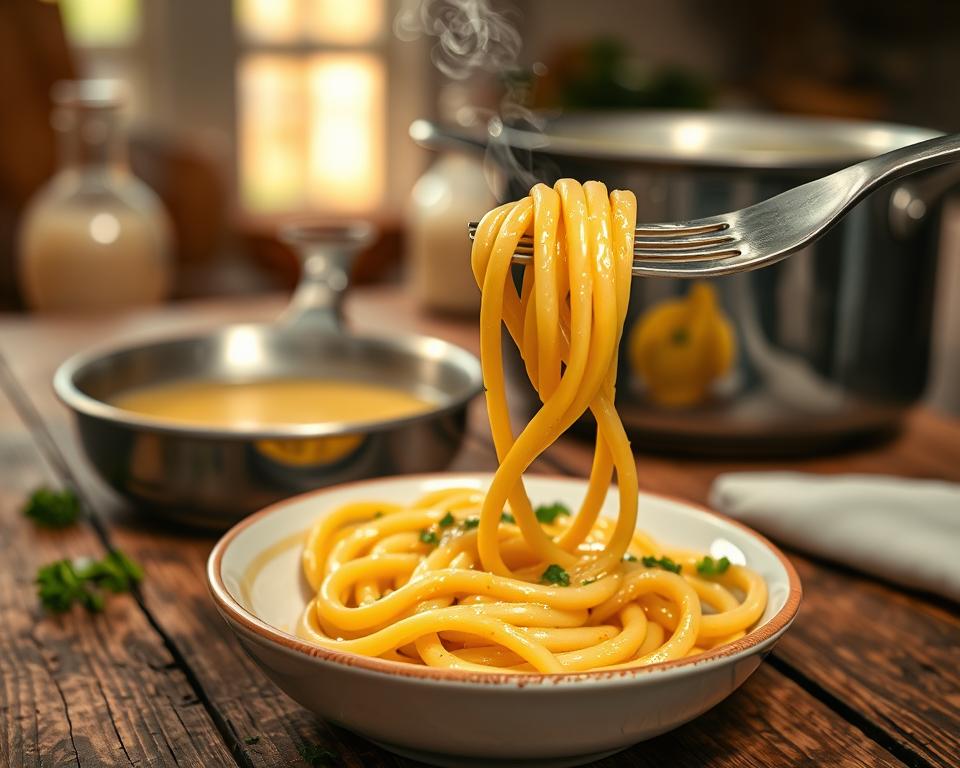
Save some cooking water before draining the pot. For 250 grams of pasta, start with 1/2 cup; another recipe may call for about 1/2 ladle. Use only what the sauce needs.
| Pasta amount or measure | Water to reserve | How to use it |
|---|---|---|
| 250 grams of pasta | 1/2 cup | Add gradually while tossing |
| One ladle measure | About 1/2 ladle | Drizzle in as needed for a glossy coating |
Gather the ingredients for the sauce and pasta
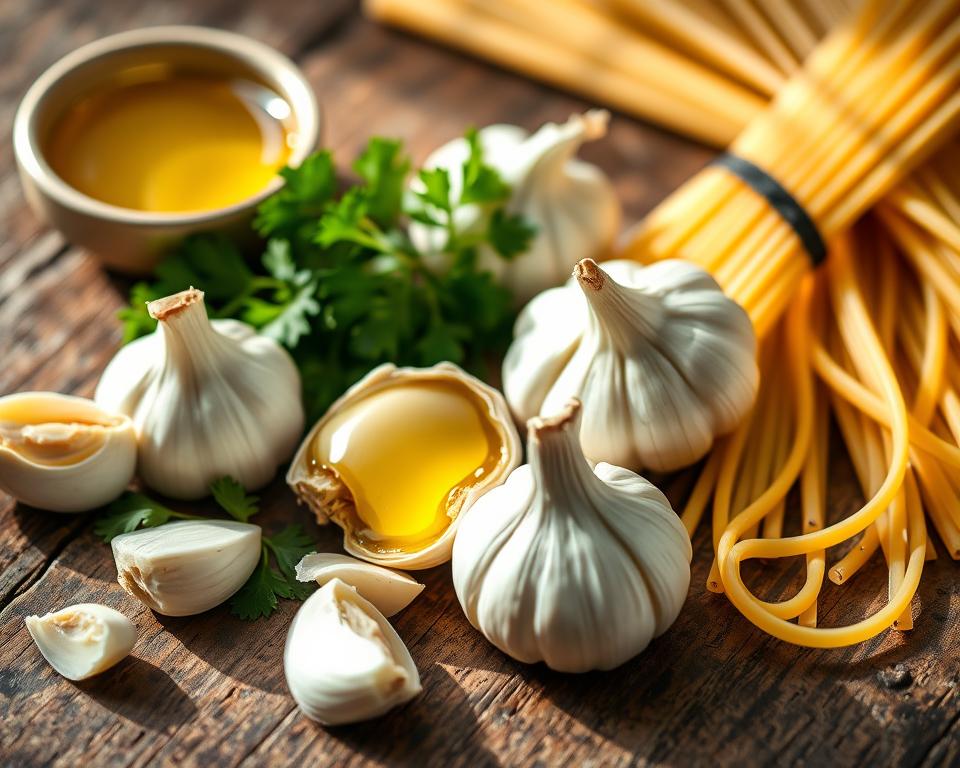
For two or three servings, choose pasta and a few simple staples. These garlic and oil pasta ingredients create a silky sauce with little prep.
The essential ingredients
Use spaghetti, linguine, tagliatelle, or another pasta you enjoy. Save starchy cooking water before draining; it helps oil cling to each strand.
Optional toppings and finishing touches
Butter adds a soft, rich note. For a bright finish, use fresh herbs for finishing, such as parsley or chives, or add lemon zest.
Grated Parmesan cheese, black pepper, and red pepper flakes bring extra flavor.
| Ingredient | Amount for 2–3 servings | Use |
|---|---|---|
| Spaghetti, linguine, or tagliatelle | 250 grams | Choose one pasta shape |
| Water | 2.5 liters | For cooking the pasta |
| Salt | 1 level tablespoon | Season the cooking water |
| Garlic | 4 cloves, sliced or chopped | Build the sauce’s savory base |
| Olive oil | 4 tablespoons | Cook the garlic and coat the pasta |
| Pasta water | 1/2 cup | Help bring the sauce together |
| Butter, optional | 1 tablespoon | Add a richer finish |
| Parsley, chives, Parmesan, or pepper | To taste | Add as desired before serving |
Choose the right pasta shape for a smooth sauce
Spaghetti is the classic choice for spaghetti aglio e olio, a dish linked to Naples. Its long strands coat easily with garlic, oil, and pasta water. Linguine works similarly, but its shape is slightly wider.
For other pasta shapes for garlic and oil, try tagliatelle, penne, or rotini. Their curves and ridges catch garlic pieces and hold the sauce. Cook each shape until the al dente pasta stays firm while you toss it.
| Pasta shape | How it works with the sauce |
|---|---|
| Spaghetti | Classic long strands coat easily. |
| Linguine | Flat strands catch the light sauce. |
| Tagliatelle | Wide ribbons make a hearty bite. |
| Penne | Hollow tubes hold small bits of garlic. |
| Rotini | Spirals catch sauce in their grooves. |
Prep the garlic so it turns golden without burning
Slice the garlic or chop it finely, then add it to olive oil in a cool pan. Cook over low heat and stir often. This low-heat garlic method lets you watch the color and catch its fragrant aroma.
For golden garlic without burning, remove the pan when the pieces turn light gold. They may keep browning in hot oil, and dark brown garlic may taste bitter. Sliced garlic for olive oil pasta has a milder flavor, while finely chopped garlic tastes stronger.
| Garlic cut | Flavor | What to watch for |
|---|---|---|
| Thin slices | Mild and mellow | Remove the pan at light gold |
| Fine chop | Bold and pungent | Stir often; small pieces brown fast |
Cook the pasta until it is al dente
Boil a large pot of water, add salt, then stir in the pasta. Follow the package directions for spaghetti cooking time, but taste it one minute early.
For al dente pasta, the center should feel cooked but slightly firm. Transfer the spaghetti to the skillet one minute early so it finishes in the garlic and oil sauce.
Save 1/2 cup of salted pasta water before draining. Its starch helps bring the sauce together in the next step.
| Check | What to do |
|---|---|
| Package timing | Use it as a guide, not the only test. |
| Texture | Taste a strand; it should be cooked but firm. |
| Before draining | Reserve 1/2 cup of pasta water. |
Turn garlic, olive oil, and pasta water into a creamy sauce
Warm the olive oil in a large skillet over low heat. Add garlic and stir until it turns lightly golden. Keep the heat gentle because smoking oil can make the sauce taste bitter.
Add the hot pasta and a splash of reserved cooking water to the skillet. For 250 grams of pasta, use up to 1/2 cup, adding water a little at a time.
Stir while pasta water starch blends with the oil. This olive oil and pasta water emulsion creates a glossy garlic sauce that clings to the pasta without feeling heavy.
Toss the pasta until every strand is coated
Move the cooked pasta straight into the skillet with the garlic and oil. Use tongs to lift and turn each strand through the sauce.
For a steady pasta tossing technique, swirl the skillet in small circles for about one minute. Add pasta water if the noodles look dry, then mix until the creamy garlic and oil pasta looks glossy and loose, with a sauce that clings to spaghetti.
Serve it right away while the sauce stays smooth and the pasta remains hot.
| What you see | What to do |
|---|---|
| Glossy strands with an even coating | Stop tossing and serve promptly. |
| Dry or sticky pasta | Add a small splash of pasta water and toss again. |
| Loose sauce pooling in the skillet | Keep tossing until the sauce coats the strands. |
Fix a sauce that is too thin, oily, or dry
Small changes can restore balance to your sauce. For sauce consistency adjustment, add liquid or oil slowly while tossing the pasta.
How to thicken a thin sauce
If the sauce looks watery, toss the pasta over low heat. This helps the oil and starchy pasta water blend. Wait briefly before adding more water.
How to balance excess oil
Add a splash of reserved cooking water, then toss well. Repeat small additions until the oil blends into a glossy pasta sauce rather than pooling in the pan.
How to loosen dry pasta
For 250 grams of pasta, start with about 1/2 cup of reserved pasta water. If the noodles still look dry, add more slowly and mix until they look moist. Use enough olive oil to coat each strand; too little can leave the pasta dull.
Add flavor without overpowering the creamy garlic sauce
Keep garlic in the lead with grated Parmesan cheese, black pepper, or red pepper flakes. Lemon zest and juice add a bright note.
Chopped parsley and chives are fresh herbs for finishing the dish with a mild, green touch. For richer buttered spaghetti, stir in one tablespoon of butter or add a small drizzle of olive oil before serving.
Sautéed shrimp, browned bacon, cooked broccoli, or sliced chicken can make the pasta more filling. Choose one and use a modest amount, so the creamy garlic sauce still shines.
Serve the creamy pasta hot for the best texture
Serve hot garlic and oil pasta right away so the sauce stays smooth and glossy. Add a fresh parsley garnish, cracked black pepper, and a small drizzle of olive oil. For a Parmesan pasta serving, grate a little cheese over each bowl.
Pair it with grilled or shredded chicken, broccoli, a simple salad, or roasted vegetables. Crisp bacon or sardines also make a savory match.
Store leftovers in a sealed container in the refrigerator for up to two days. Reheat them in a skillet with olive oil and one tablespoon of water, stirring until the pasta loosens.
Freezing can change the pasta’s texture, so skipping it works best. If needed, freeze small portions and reheat them in a skillet.




