

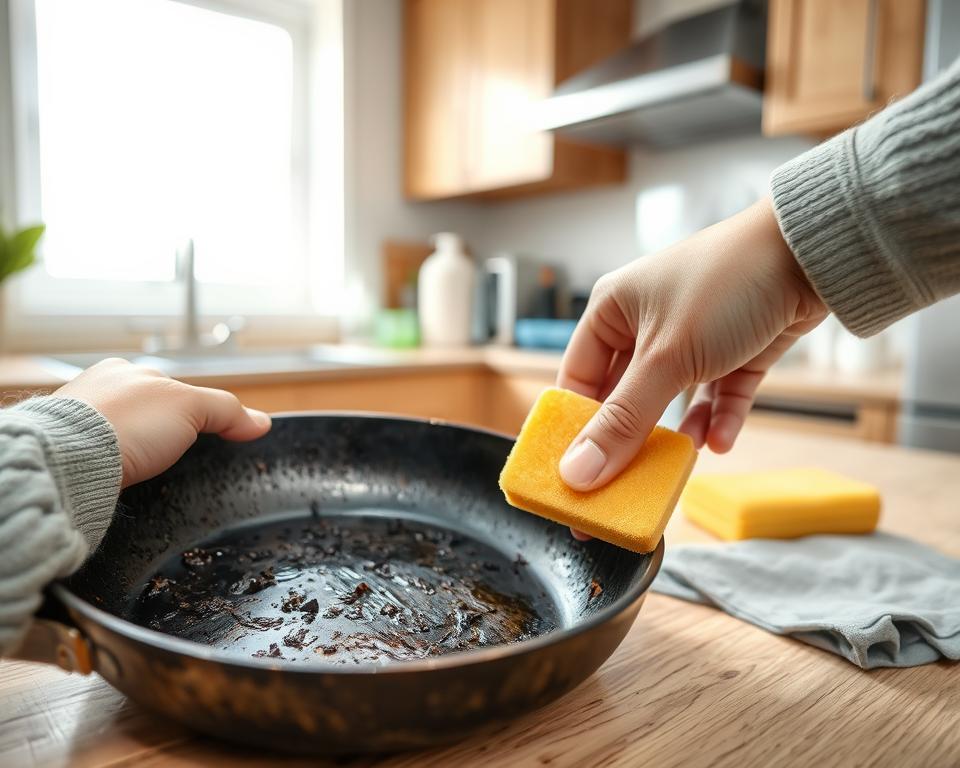
That hard, black crust may look permanent, but hot water softens stuck-on food and grease before scrubbing. A little baking soda can also help lift charred residue.
For easier burnt pan cleaning, start with a gentle method and consider your pan’s material. The right approach saves time and helps protect its surface.
Key Takeaways
- Hot water helps loosen stuck-on food and grease.
- Baking soda can help lift stubborn residue.
- Start with gentle cleaning methods.
- Choose a method that suits your pan’s material.
- Avoid harsh scrubbing that may damage the surface.
Is the burnt pan safe to clean and use again?
A pan is not automatically unsafe after food burns in it. For better burnt pan safety, let it cool on the stove or a heat-safe surface before washing. Cold water on a very hot pan can cause thermal shock, which may warp or crack some cookware.
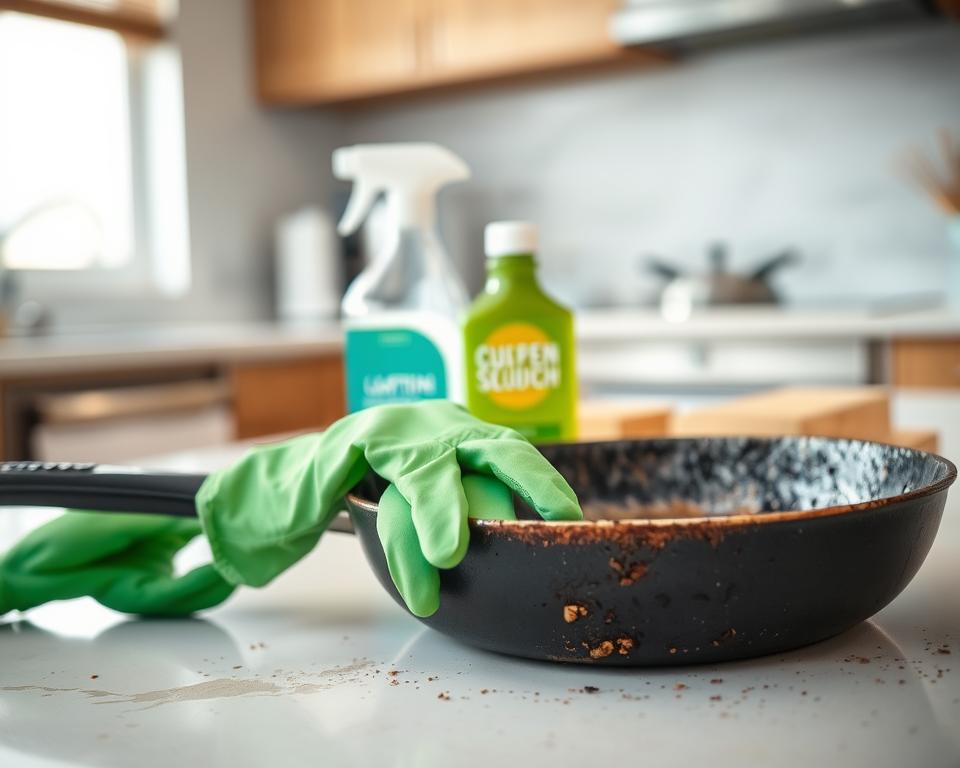
Check nonstick pans for peeling, flaking, or major wear. If you find a damaged nonstick coating, follow the manufacturer’s guidance before using the pan again. Stainless steel pans can usually be cleaned, but inspect them for warping or other damage.
| What to check | What to do |
|---|---|
| Pan is still hot | Let it cool naturally before washing. |
| Nonstick surface is peeling or flaking | Ask the manufacturer whether the pan is safe to use. |
| Stainless steel pan looks warped | Stop using it if it no longer sits flat or seems unsafe. |
What to do before removing the burnt crust
Turn off the heat and move the pan from the burner. Let it cool before handling it. This prevents burns and protects the pan from sudden temperature changes.
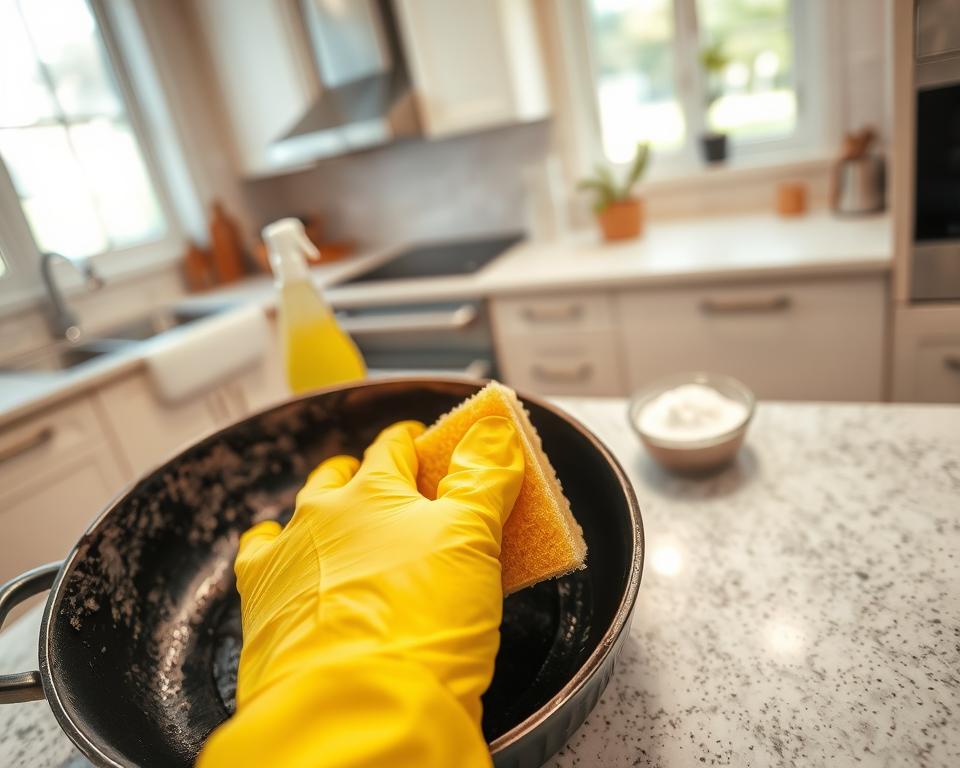
Lift loose food with a wooden or silicone spoon. Do not use knives, forks, or other metal tools, which can scratch the surface. For stuck-on charred residue, cover it with warm water and add a few drops of dish soap.
Soak the pan until the crust softens. Wipe it with a nonabrasive sponge, rinse it well, and dry it before storing. These steps make burnt pan cleaning safer and easier.
| Step | What to do |
|---|---|
| Cool the pan | Turn off the heat and let the pan cool naturally. |
| Remove loose food | Use a wooden or silicone spoon, not a metal utensil. |
| Soak and wipe | Use warm, soapy water, then a nonabrasive sponge. |
| Rinse and dry | Rinse away soap and dry the pan before storing. |
Choose a cleaning method for your pan’s material
Each pan surface needs a different cleaning method. Soak delicate finishes gently, and check the care guide before removing stubborn marks.
Cleaning nonstick pans without scratching the coating
Let the pan cool before cleaning. Soak it in warm water with dish soap, then wipe it with a soft sponge. A nonabrasive sponge helps protect the nonstick coating from scratches.
Removing residue from stainless steel pans
Soak the burnt area in warm water and dish soap. If residue remains, add water and a little dish soap to the pan. Heat it for a few minutes, turn off the heat, and let it cool before washing with a suitable sponge.
For persistent marks, try a light paste of baking soda and water. Check the maker’s care instructions first, because some stainless steel pans need special care.
Handling cast iron and enameled cookware
Cast iron and enameled cookware may need different care. Follow the manufacturer’s instructions to avoid harming the seasoning or finish.
How to loosen light burnt residue with dish soap
For a light burn, add a few drops of dish soap to warm water. Cover the burnt area, then let the pan soak for a few minutes. This helps stuck-on food and grease soften.
Use a nonabrasive sponge to lift the softened residue. Avoid hard scrubbing because it can scratch some pan surfaces. If a grease crust remains, soak the pan again and wash it gently.
Rinse away the soap and dry the pan with a clean towel.
| Step | What to do | Why it helps |
|---|---|---|
| Soak | Cover the burnt area with warm, soapy water for a few minutes. | Softens light food and grease residue. |
| Wash | Wipe gently with a nonabrasive sponge. | Helps remove residue without harsh scrubbing. |
| Repeat and rinse | Soak again if needed, rinse, and dry. | Clears remaining soap and loosened grime. |
How baking soda helps lift stubborn crusts
Baking soda is alkaline and mildly abrasive. It reacts with acidic food residue and helps loosen stuck particles. Its fine crystals make burnt pan cleaning easier without a harsh scouring pad.
For stubborn charred residue on stainless steel, mix baking soda with a little water. Make a light paste, spread it over the marks, and let it sit briefly. Wipe with a soft sponge, but check the pan maker’s care guide first.
When to simmer water and baking soda in the pan
Use hot water and baking soda when a gentle wash leaves burnt-on residue. Lift loose food with a wooden or silicone spoon. Add enough water to cover the darkened area.
Bring the water to a boil, turn off the heat, and add one or two tablespoons of baking soda. Stir with a nonmetal utensil, then let it sit 10 to 15 minutes for light residue. Check older buildup every 10 minutes, up to 30 minutes.
Scrub gently, and do not leave the mixture in the pan for many hours. For aluminum pan care, keep the soak brief. Use the same caution with nonstick cookware.
| Residue | Rest time | Care tip |
|---|---|---|
| Light and recent | 10 to 15 minutes | Scrub gently after the water cools. |
| Older and stubborn | Check every 10 minutes, up to 30 minutes | Stop when the crust loosens; do not leave it for hours. |
| Aluminum or nonstick pan | Keep the soak brief | Avoid long soaking to help protect the pan. |
How to clean burnt grease from the outside and bottom
Let the pan cool, then wipe away loose grease with a paper towel. If the material allows it, soak the outside in warm, soapy water. Use a soft sponge to remove the grease crust without scratching the surface.
For stubborn charred residue, mix a small amount of baking soda with water. Rub gently, then rinse and dry the pan. Check the care instructions before using white vinegar; it may not suit every finish.
| Step | Gentle approach |
|---|---|
| Loosen grease | Soak in warm, soapy water when the pan’s care guide permits. |
| Lift residue | Use a soft sponge and light pressure. |
| Check cleaners | Confirm baking soda or white vinegar is safe for the pan’s finish. |
Which burnt-pan cleaning mistakes can cause damage?
Metal utensils and steel wool can scratch a pan, wear down its finish, or damage a nonstick coating. Use a nonabrasive sponge, and let the burnt residue soak before you scrub.
Check the pan’s care instructions before using a cleaning method meant for another material. Don’t mix cleaning products, and rinse the pan well before switching methods. A baking soda soak can help, but don’t leave it for hours, especially in aluminum or nonstick pans.
When a damaged pan should be replaced
Check a nonstick pan for peeling, flaking, or deep damage. A damaged nonstick coating can make the pan hard to clean and difficult to use confidently. Read the manufacturer’s care guidance to learn whether the pan remains safe to use.
For burnt pan safety, stop using the pan if its coating is coming off. Do not scrape or scrub the pan to hide the damage. Good pan care can prevent wear, but it cannot repair a coating that is already peeling.
| What you see | What to do |
|---|---|
| Nonstick surface is peeling or flaking | Check the manufacturer’s guidance before using the pan again. |
| Nonstick surface is badly damaged | Consider replacing the pan if the maker advises against further use. |
| Burnt residue, with no visible coating damage | Clean gently and inspect the surface again before cooking. |
Use the gentlest method that removes the burnt residue
For burnt pan cleaning, start with warm water and dish soap. Let the pan soak, then lift residue with a nonabrasive sponge. If crust remains, soak it again rather than scrubbing harder.
For stubborn buildup, choose a method suited to the pan’s material and follow the manufacturer’s care instructions. This removes residue without harming the coating or finish.
To prevent another tough cleanup, watch foods that stick easily, such as milk, sugar, and sauces. Control the heat and stir as needed. After the pan cools, add water and dish soap so residue is less likely to dry and cling.




