

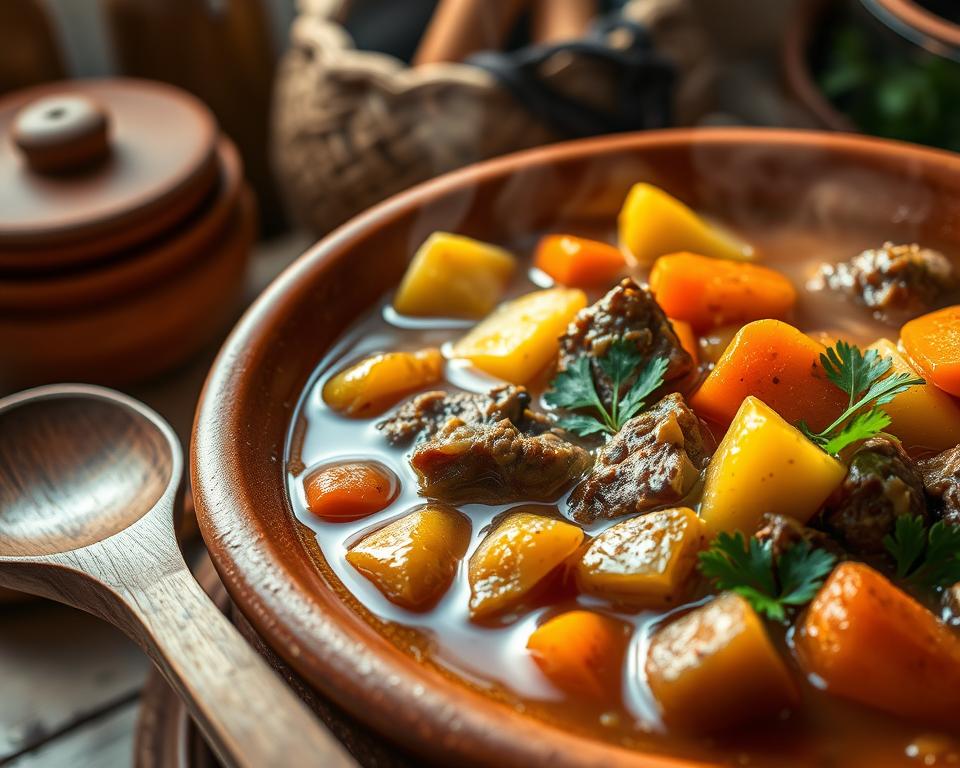
A pressure-cooker version of carne de panela com batata can be ready in less than an hour. This Brazilian beef and potato stew pairs tender chuck beef with potatoes that soak up the savory sauce.
It is a cozy, satisfying meal made in one pot. As the beef simmers, the seasonings deepen, and the gravy grows rich. The gravy is perfect for spooning over every bite.
Key Takeaways
- Carne de panela com batata is a Brazilian beef-and-potato dish.
- Chuck beef becomes tender as it cooks in seasoned broth.
- Potatoes absorb flavor from the savory sauce.
- A pressure cooker can make this comforting meal in less than an hour.
Gather the ingredients for carne de panela com batata
Set out the chuck beef, potatoes, vegetables, and pantry staples before cooking. Use a simple broth, or add red wine for deeper flavor.
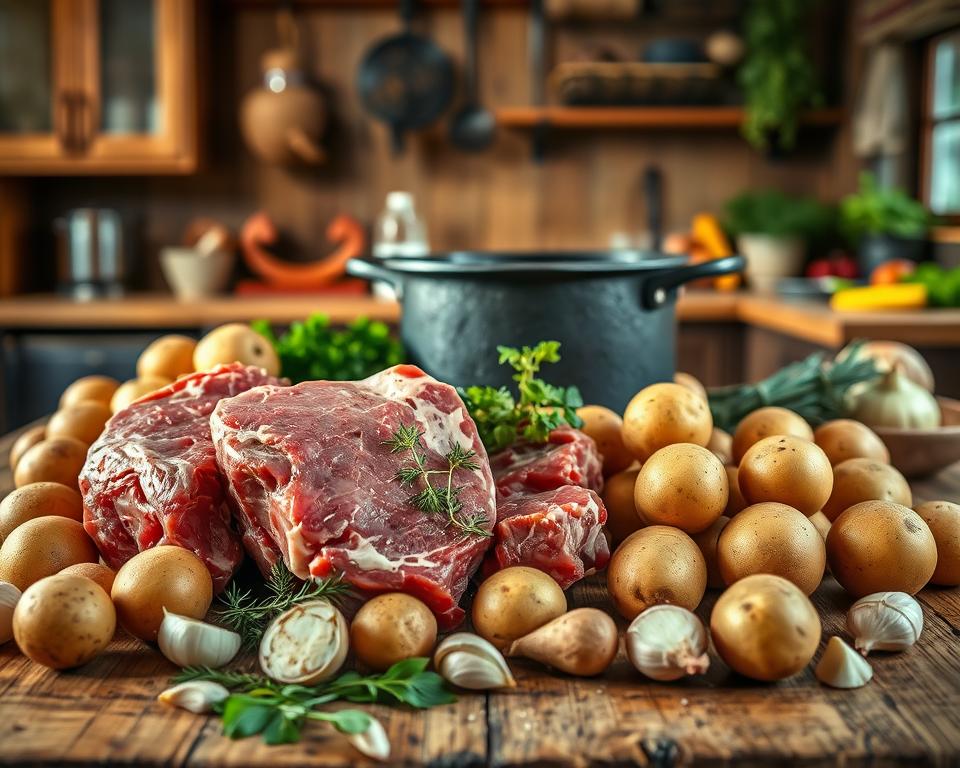
Beef, potatoes, and vegetables
Use 1 kilogram of chuck beef, cut into large cubes. Choose 5 medium potatoes, peeled and halved, or 1 kilogram of peeled potatoes cut into cubes. Prepare 1 chopped onion and 2 chopped garlic cloves.
Seasonings, broth, and cooking fat
Keep 2 tablespoons of oil, salt, black pepper, paprika, and dried parsley ready. For onion and garlic seasoning, use 2 tablespoons of dried onion with stock cubes.
Cover beef with water, or use half a cup of dry red wine and enough water. Finish with chopped parsley if you like.
Choose a tender cut of beef for the pot
Chuck roast, called acém bovino or miolo de acém in Portuguese, is an affordable choice for this dish. It has many fibers and little fat, so slow cooking makes it tender and flavorful.
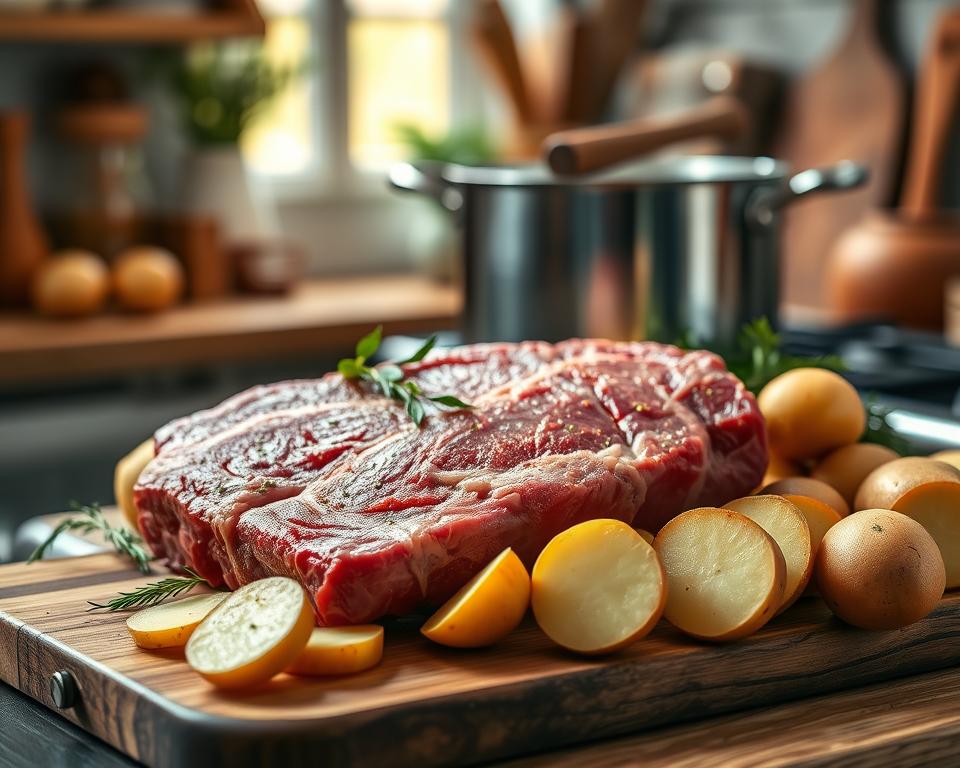
Short ribs, beef shank, flank steak, shoulder, and eye of round also work well. Cooking time differs by cut, so check the beef while it simmers. Small pieces can help tougher cuts cook faster.
Among stew meat cuts, choose pieces suited to slow, moist heat. Chuck roast is a reliable choice for a rich pot with potatoes.
| Beef cut | What to expect | Cooking tip |
|---|---|---|
| Chuck roast | Budget-friendly, fibrous, and lower in fat | Simmer slowly until fork-tender |
| Short ribs | Rich flavor and more fat | Allow time for the meat to soften |
| Beef shank | Firm texture that suits slow cooking | Check tenderness before serving |
| Flank steak | Lean, with long muscle fibers | Cut into smaller pieces for the pot |
| Shoulder or eye of round | Lean options with varied cooking times | Simmer gently and test for tenderness |
Cut the beef and potatoes for even cooking
Cut beef into even cubes so every piece cooks at the same rate. Recipes may call for large beef cubes or medium chunks; smaller pieces cook faster with a tougher cut.
Cut potatoes into halves or similar-sized diced potatoes. This recipe does not specify whole potatoes, which can take longer to cook than cut pieces.
Season the beef before it goes into the pot
Pat the beef dry. Coat it with paprika and crushed natural stock cubes for savory flavor. Taste the sauce before adding more salt.
For a simpler blend, season the meat with salt and black pepper. Before pressure cooking, add half a cup of dry red wine for a deeper, richer taste.
If you skip the stock cubes, add two garlic cloves and cumin to taste. Add dried parsley after the potatoes enter the pressure cooker.
| Seasoning choice | What to add | Flavor note |
|---|---|---|
| Cube and paprika | Two natural stock cubes and paprika to taste | Rich, savory seasoning; check the salt before adding more |
| Wine and pepper | Salt and black pepper to taste, plus half a cup of dry red wine | Bold, warm flavor with a deeper sauce |
| No stock cubes | Two garlic cloves and cumin to taste | A fragrant alternative with flexible seasoning |
Brown the beef to build deep flavor
Heat 2 tablespoons of corn oil in the pot over medium-high heat. Add 2 tablespoons of dried onion and cook until well browned. Add chuck beef in a single layer, working in batches if needed, and brown it for about 15 minutes.
This browning chuck beef step creates savory bits that enrich the sauce. For the pressure cooker method, brown the meat using the sauté setting before adding liquid. Avoid crowding the pot, so the beef sears instead of steams.
Cook the onion, garlic, and tomatoes in the same pot
After browning the beef, lower the heat and add chopped onion to the same pot. Stir until it softens, scraping up browned bits as it cooks.
Add garlic near the end so it turns fragrant without burning. This onion and garlic seasoning adds depth to the savory beef base.
This dish’s recipes do not specify tomatoes or tomato sauce, so they give no set amount. If your version calls for tomato sauce, stir it in with the aromatics and use that recipe’s quantity.
Add the broth and scrape up the browned bits
Pour in enough water to cover beef, keeping the liquid level even with the meat. Add two natural stock cubes and stir until they dissolve.
Use a wooden spoon to scrape the browned bits from the bottom of the pot. These bits add savory flavor to the cooking liquid. Add dry red wine and enough water to cover beef; simmering liquid helps form thick gravy.
| Liquid method | What to add | Key step |
|---|---|---|
| Stock cube | Water and two natural stock cubes | Keep the water level even with the beef |
| Red wine | Dry red wine and enough water to cover beef | Scrape browned bits into the liquid |
Simmer the beef until it turns fork-tender
For pressure cooking, cook seasoned beef in broth under pressure for 20 to 25 minutes. The exact time depends on the cut and piece size.
Let the pressure release before opening the pot. Test a piece with a fork; tender stew beef should pull apart easily. If it feels firm, cook it under pressure for a few more minutes.
This quick method gives the beef a slow-cooked texture. Keep the potatoes out until the pressure releases so they stay intact.
Add the potatoes at the right time
Beef needs more time to soften than potatoes. Add potatoes after the first pressure-cooking stage so they hold their shape.
In one method, add five medium potatoes cut in half with dried parsley. Cook for 5 minutes after the cooker starts to whistle.
For another method, stir in 1 kilogram of cubed potatoes and water, then cook until the water has evaporated. Keep the potatoes added at the end so they do not turn mushy. Whole potatoes take longer to cook, so cut them into even pieces for more reliable pressure-cooker potatoes.
Adjust the sauce and check for doneness
When cooking ends, check the beef and potatoes before serving. The beef should pierce easily with a fork, while the potatoes should be tender but keep their shape.
For thick gravy, simmer the sauce uncovered until it reaches your preferred texture. Stir gently to keep the potatoes intact. No sauce measurement is required; judge the gravy by its look and feel.
| What to check | What to look for | What to do |
|---|---|---|
| Beef tenderness | A fork slides into the meat with little effort. | Simmer the beef longer if it still feels firm. |
| Potato doneness | A fork pierces the center, while each piece keeps its shape. | Cook briefly longer if the center is still firm. |
| Sauce texture | The gravy coats the beef and potatoes. | Simmer uncovered to thicken, or add a little water if it seems too thick. |
Serve the beef and potatoes with the thickened gravy
Spoon the Brazilian beef stew into shallow bowls, giving each serving tender potatoes and plenty of savory gravy. Serve it with white rice as a rice accompaniment that soaks up the sauce.
Finish each bowl with dried parsley or chopped fresh parsley. The potatoes absorb the rich flavor of the gravy, so serve them while warm.
Store, reheat, and enjoy the leftovers responsibly
Cool leftover beef and potatoes. Refrigerate them in a shallow, covered container within two hours. Use these leftovers within three to four days, or freeze them for longer storage.
For safe reheating stew, warm only the amount you plan to eat. Heat it to 165°F, stirring so the beef, potatoes, and gravy warm evenly. Add a splash of broth if the sauce thickened in the fridge.
These steps work well for pressure-cooked beef, too. Check the temperature with a food thermometer before serving.
Make this tender, well-seasoned beef and potato dish again
Carne de panela com batata is a comforting dish with simple ingredients and rich, savory gravy. Browning beef first, then simmering it with aromatics, builds flavor in every bite.
Chuck beef is reliable because it becomes tender as it cooks. Short ribs, beef shank, flank steak, shoulder, or eye of round also work. A pressure cooker shortens cooking time and lets the potatoes soak up the sauce.
Serve it hot for a family-style Brazilian meal, with rice or crusty bread to catch the gravy. Save leftovers in the fridge and reheat them gently for another easy, satisfying meal.




