

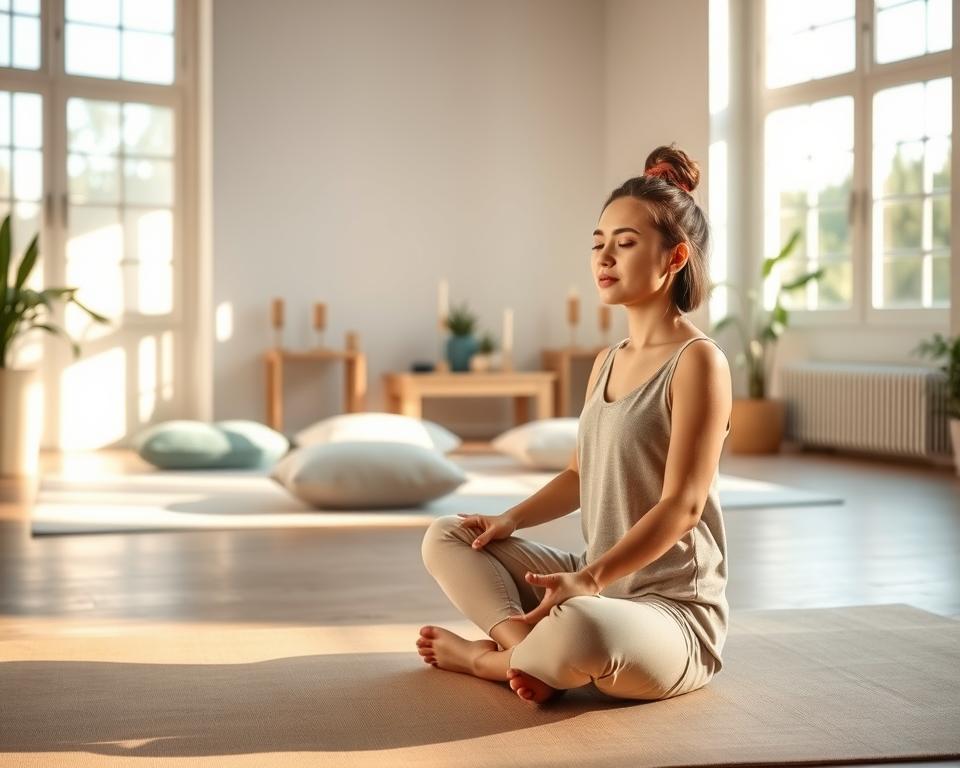
Some guided meditations take less than five minutes, and no special training is needed. That makes a short session an easy way to explore meditation for stress relief without a major time commitment.
For guided meditation for beginners, a five-minute meditation offers a simple starting point. The Down Dog Meditation app offers short guided and sleep meditations, as well as walking practices. Choose a topic or remove the theme; the app is available in English, Portuguese, and eight other languages.
Key Takeaways
- You can try guided meditation without special training.
- A five-minute meditation is a manageable first step.
- Short guided sessions may support meditation for stress relief.
- Apps and YouTube offer guided practices.
- Down Dog Meditation includes short, customizable sessions.
Why five minutes is enough for your first meditation
Starting small makes meditation easier to fit into a busy day. Five minutes lets you pause, notice your breath, and practice returning your attention. A short guided meditation offers a simple first step for a beginner meditation practice.
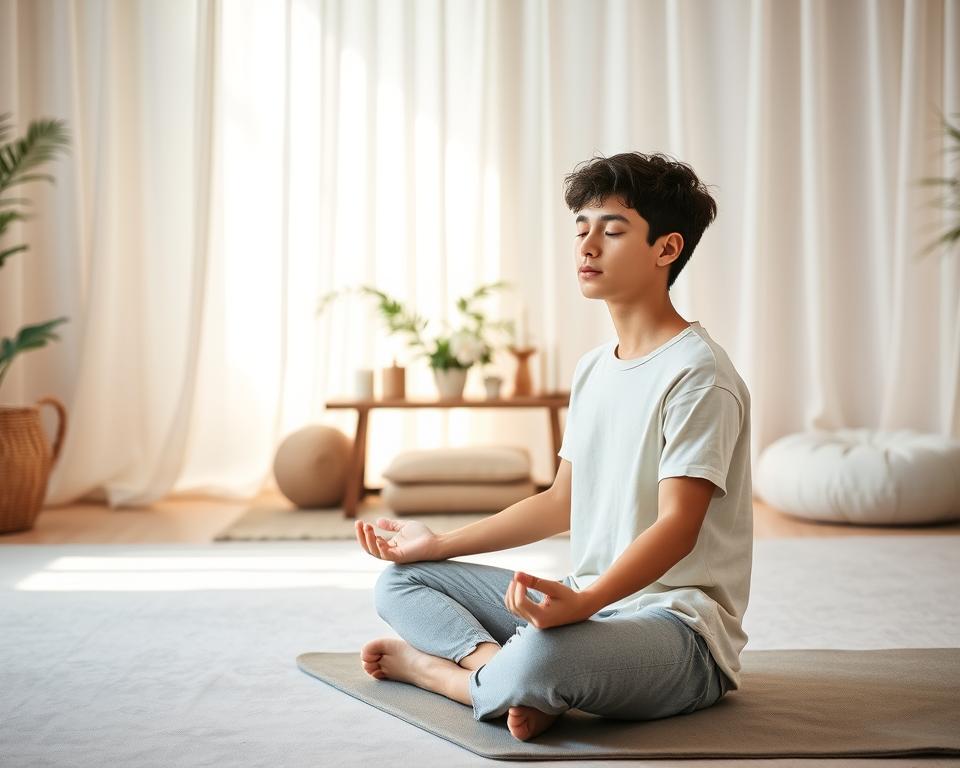
Regular practice, even in brief sessions, may support mindfulness for stress reduction and help you feel calmer. Over time, meditation can build mental clarity, patience, and compassion.
Some people find that a steady routine supports better sleep and a more hopeful outlook. You don’t need a long session to begin; a few quiet minutes can be a useful break in your day.
Set up a low-distraction spot before you begin
Choose a comfortable place where interruptions are unlikely. Your quiet meditation space needs no special furniture; a chair or cushion in a calm corner works well. Use the same few minutes each day to build a simple routine.
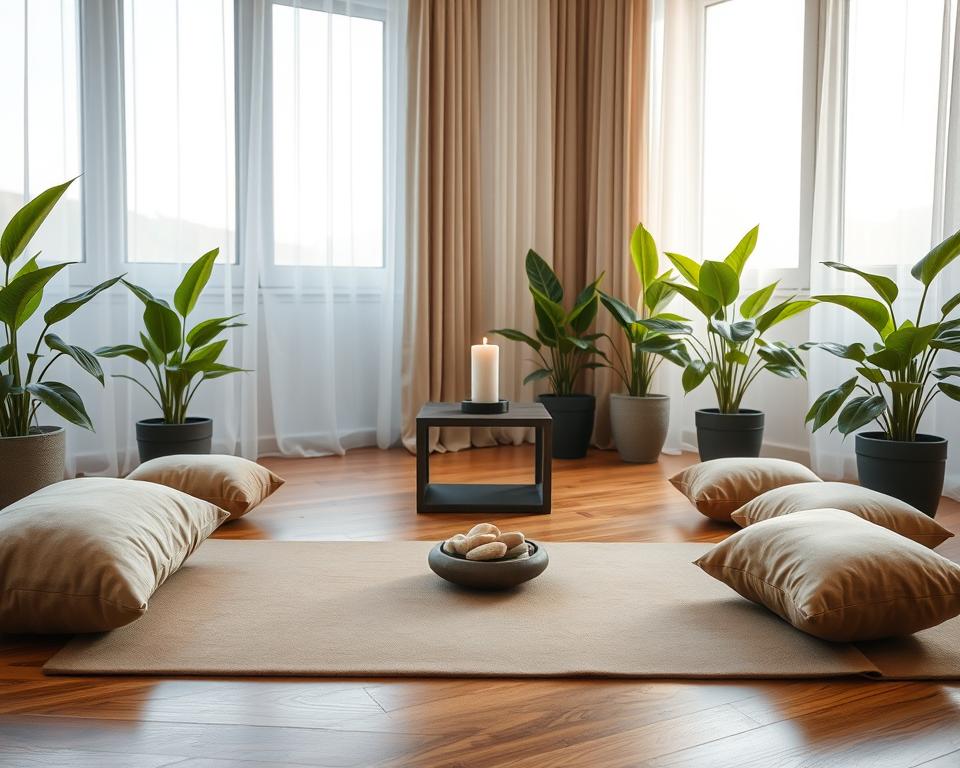
Try mindful breathing exercises in silence, or play soft meditation music to help you relax. The Down Dog app offers calming music, nature sounds, brain-wave audio, spiritual playlists, and silence. Choose the option that feels right.
Get comfortable without trying to sit perfectly still
Most meditation starts while seated, with your spine upright and eyes closed. Find a comfortable meditation posture that keeps you alert without making you stiff. Shift your legs or relax your shoulders when needed.
A body scan meditation helps you notice and soften tension, one area at a time. Sitting on a chair is fine when the floor feels uncomfortable.
Seated meditation is not your only option. You can do guided sleep meditation while lying down, and the Down Dog app offers walking meditations. Choose a position that suits the practice and feels safe for your body.
Follow this five-minute guided meditation
Sit in a comfortable position and let these brief cues guide you. This five-minute mindfulness practice builds present-moment focus as you notice your breath, thoughts, and body without judgment.
0:00–1:00: Notice your body and settle in
Feel the support beneath you. Notice where your body touches the chair or floor, then let your shoulders soften. You do not need to sit perfectly still.
1:00–2:00: Follow the natural rhythm of your breath
Notice each inhale and exhale without changing your breathing. Feel the air move through your nose or chest. This guided breathing meditation uses your breath as an anchor for attention.
2:00–4:00: Return to your breath whenever you drift
Your mind may move to a task, a sound, or a worry. Notice the thought without judging it, then gently return your attention to one breath. Each return is part of the practice.
4:00–5:00: Widen your attention and prepare to finish
Keep feeling your breath as you notice nearby sounds and sensations. Take in the whole moment without needing to change it. When ready, open your eyes and move at an easy pace.
Bring your attention back when your mind wanders
During mindfulness meditation, your mind may drift. You may think about a task, replay a conversation, or notice a sound. Gently name the thought, then return to your breath without judging yourself.
Each return builds focus training. Feel air moving in and out, or notice your body against the chair. This simple shift can ease racing thoughts and support meditation for mental clarity.
Choose the kind of guidance that fits you
Guided meditation options range from a steady voice to long periods of quiet. Down Dog Meditation lets you choose a topic, instruction level, and silence length. You can select six instructors and more than 12 English voices.
If sitting still feels hard, try a walking meditation. Down Dog Meditation offers guided, sleep, and walking practices across 175 themes. It also offers music and sound choices, plus nine other languages, including Portuguese.
These meditation app features help you shape a short session around your mood and routine. The app requires iOS 15.0 or later, includes in-app purchases, and integrates with Apple Health. Its listing says too few ratings or reviews exist to show an overview.
| Choice | What you can set |
|---|---|
| Topic and style | Choose from listed themes, including guided, sleep, and walking practices. |
| Instructor and voice | Select one of six instructors or more than 12 English voices. |
| Sound and silence | Adjust the amount of instructor guidance, silence, music, and other sounds. |
| Language and access | Use one of nine additional languages, including Portuguese; iOS 15.0 or later is required. |
End the meditation without rushing into the next task
When your timer ends, take a few easy breaths before moving. Feel your feet on the floor and notice the room around you. Follow your breath back to present-moment awareness.
This pause creates a mindful transition from meditation to the rest of your day. If you feel sleepy, sit up slowly and take a moment to wake fully.
Some people use relaxation meditation to ease into rest. Yoga Nidra guides the body toward sleep while the mind stays awake for instructions. The Down Dog app offers sleep meditations for this practice.
| How you feel | A gentle next step |
|---|---|
| Calm and alert | Take one breath and begin your next task at an easy pace. |
| Sleepy or relaxed | Sit up slowly, stretch, and notice your surroundings. |
Make five-minute sessions easy to repeat
Choose a time you can protect, such as after breakfast or before bed. A steady cue can make your daily meditation routine feel natural.
A short daily meditation fits busy days. With Down Dog, you can set a customizable meditation duration from a few minutes to 90. You can choose the amount of silence or instructor guidance you want.
Begin with a simple plan. Adjust it when your schedule or comfort level changes.
| Plan | When to try it | What to choose |
|---|---|---|
| Five minutes | On a busy day | A brief session with light guidance |
| Ten minutes | When you have more time | More quiet or steady instructor cues |
| Flexible length | As your practice changes | Set a duration that fits your day |
Let five minutes be your starting point
Five minutes can start beginner mindfulness without making meditation feel like another big task. A guided session may help if you are new to meditation or returning after a break.
Try a short practice when it fits your day. Apps such as Down Dog offer guided meditations under five minutes, with options to shape each session to your needs. You can also find guidance on YouTube, with no special training required.
Keep the goal simple: pause, follow the guidance, and return to your breath when your mind wanders. Repeating this small step can build a meditation habit and support stress management over time.




