

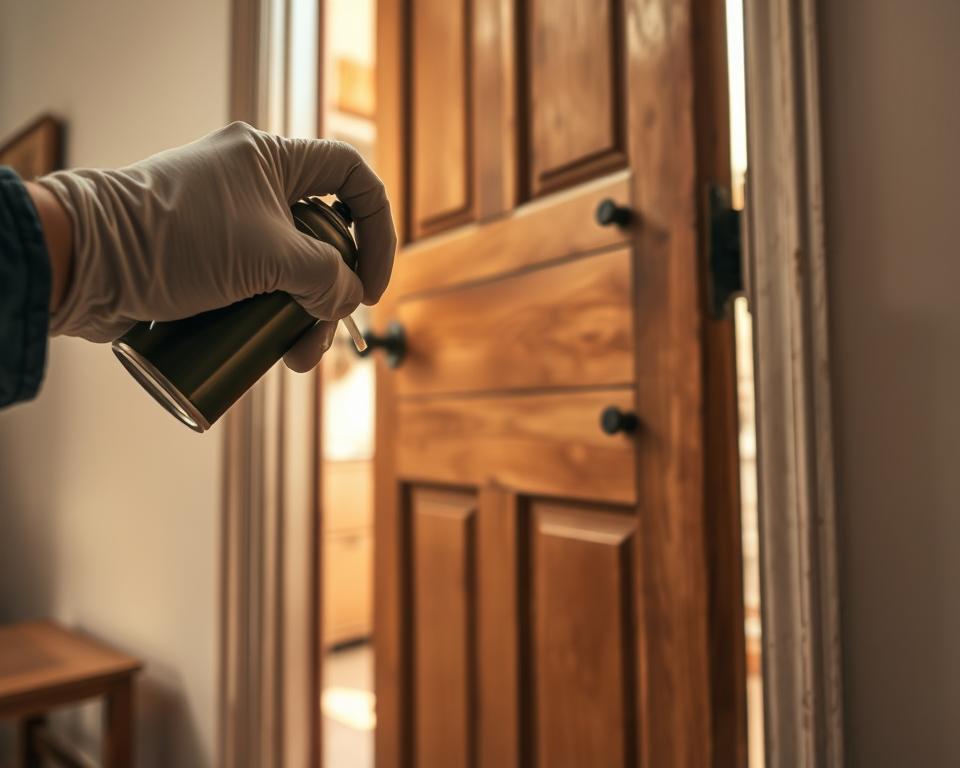
Squeaky door maintenance matters because a tiny hinge shift can turn a quiet room into a chorus of squeaks. Dust, rust, low lubrication, and humid weather can all cause that irritating sound.
Good squeaky door troubleshooting begins by finding the source. Many hinge problems take a few minutes, but a door rubbing against its frame may need alignment, not just lubricant.
Key Takeaways
- Hinges are a common source of squeaks.
- Dust, rust, and dry parts can create noise.
- Some fixes take just a few minutes.
- A rubbing door may need alignment work, not just lubrication.
Where Is the Squeak Coming From?
A squeak often starts at a hinge when metal parts rub with too little lubrication. This metal-on-metal friction can wear away the hinge’s protective layer. Dust near the pin can slow movement, while damp air may cause rust.
For squeaky door troubleshooting, open and close the door slowly several times. Listen for the loudest hinge, and hold your hand nearby to feel vibration. Stay clear of moving parts, and note clicking or uneven movement.

Also check the door’s path. It may scrape the floor, frame, or side while swinging.
| What you notice | Possible source |
|---|---|
| Squeak near a hinge | Dry or dusty hinge parts |
| Clicking or vibration | Uneven hinge movement |
| Scraping as the door swings | Contact with the floor or frame |
What Tools and Lubricant Do You Need?
Choose a metal-part lubricant, such as silicone spray lubricant. Mineral oil made for tools and mechanisms can also work. Apply a small amount to keep dust from sticking to the hinge.
Keep a clean cloth nearby to remove dirt and extra oil. Use a small brush to lift loose residue from light hinge oxidation. Graphite powder for locks is designed for locks, not door hinges.
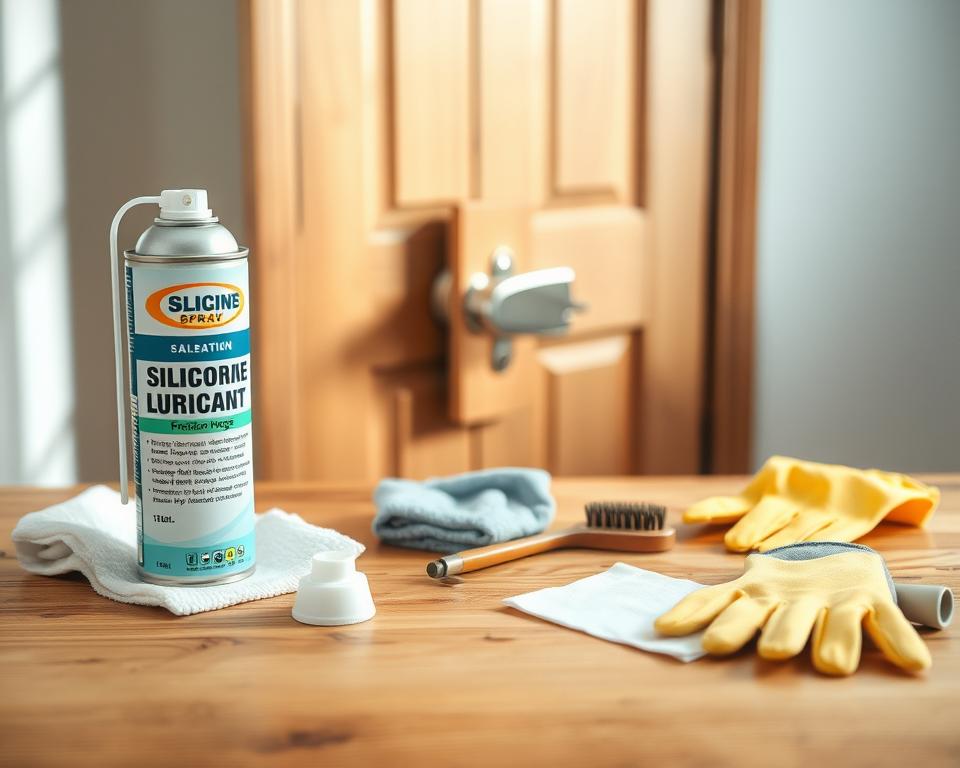
| Item | Use |
|---|---|
| Metal-mechanism lubricant | Lubricate the hinge with a product made for metal parts. |
| Mineral oil for tools | Use a small amount as another hinge lubricant option. |
| Clean cloth | Wipe away grime and excess lubricant. |
| Small brush | Clear loose residue from light oxidation. |
| Graphite powder for locks | Keep it for locks; it is not a hinge treatment. |
How Can You Prepare the Door Before Maintenance?
Open and close the door slowly a few times. Listen for the squeak and identify the noisy hinge. This quick check guides your squeaky door maintenance.
Watch the door as it moves. Look for a tilt or rubbing along the floor, frame, or side.
If it sticks or resists closing, door frame alignment may cause the problem. Lubricant may quiet the sound briefly, but it cannot fix rubbing.
Can Lubricating the Hinges Stop the Noise?
Yes, if the hinge is in good shape. Proper lubrication of door hinges can quiet a squeak without changing the door’s fit or alignment.
Apply Lubricant Without Removing the Door
Apply a small amount of lubricant made for metal parts to the hinge pin and moving joints. Open and close the door several times to spread it through the hinge. Wipe off excess lubricant to prevent drips on the door or frame.
Remove and Lubricate a Stubborn Hinge Pin
If the hinge pin comes out easily, coat it with petroleum jelly and slide it back into place. This simple hinge pin removal method can help when lubricant does not stop the squeak.
Do not force a badly rusted, stuck, or visibly worn pin. Pressure can damage the hinge or loosen its connection to the door or frame.
| Hinge condition | What to try | What to avoid |
|---|---|---|
| Sound hinge, light squeak | Apply a small amount of metal lubricant and move the door several times. | Leaving drips on the door or frame. |
| Pin moves freely | Remove it, coat it with petroleum jelly, and reinstall it. | Using more lubricant than needed. |
| Pin is rusted, stuck, or worn | Stop before removal and inspect the hinge. | Forcing the pin and risking damage. |
How Do You Clean Grime From the Hinge?
Begin hinge cleaning by wiping loose dirt with a clean cloth. Use a small brush to loosen grime around the hinge knuckle. Clean the hinge before adding lubricant.
Rust can increase friction and make a door squeak. For light rust, gently brush the surface during rust removal. Wipe away dust before lubrication of door hinges.
If a hinge pin is badly rusted, stuck, or visibly worn, do not force it out. Forcing the pin may damage the hinge or door.
Could Loose Hinge Screws Be Causing the Squeak?
If the door still sits crooked, rubs, or sticks after lubrication, check for loose hinge screws. A shifting hinge can move the door and add strain as it swings. Tighten each screw with a fitting screwdriver until snug; too much force can damage the screw or wood.
Wood screw holes can weaken over time, so take care with an older door. If the problem remains, the hinge may need to be repositioned. Check the door’s support before removing screws, especially if the door is heavy.
This step can help with squeaky door troubleshooting when lubrication alone does not work.
What Should You Do If the Door Is Rubbing the Frame?
Slowly open and close the door to find where it catches. Rubbing at the top, side, or floor often signals a door frame alignment issue, not a dry hinge. Lubricant may quiet the noise briefly, but it will not fix the cause.
Inspect the hinge screws and tighten any that feel loose. If the door still rubs or sticks, you may need to reposition a hinge. This rubbing door repair may require removing screws, so check the door’s weight and support it first.
How Can You Tell Whether the Repair Worked?
Open and close the door several times. This helps the lubricant reach moving parts. During this squeaky door test, listen for noise and watch for rubbing on the floor, frame, or side.
Wipe away excess lubricant. If the squeak or metal-on-metal friction remains, or the door is hard to close, check the hinge screws and alignment. Lubricant may not fix the underlying cause.
How Do You Keep the Door Quiet Over Time?
Make routine hinge maintenance part of your home care. Wipe away dust and grime sometimes, and check that every screw feels snug. If a hinge squeaks or resists, add a small amount of lubricant.
For lubrication of door hinges, use enough product to coat the moving parts. Too much lubricant can attract dust and create sticky buildup. Wipe away extra product with a clean cloth.
If a hinge is worn or damaged, choose a replacement that fits the door’s size, weight, and type. For a heavy door, check the hinge’s load capacity before buying.
Keep Your Door Moving Quietly With Simple Maintenance
Regular squeaky door maintenance is quick and simple. Clean the hinges, tighten loose screws, and apply a little lubricant. Bar soap or paraffin wax may reduce friction. Olive oil works in a pinch, but it may attract dirt and need frequent reapplication. Avoid glycerin-based soap because it can promote rust.
Check the door alignment if it rubs the frame or keeps making noise. Tighten loose screws, then test the door as it swings. Many basic fixes take about 15 minutes.
If a hinge is bent, broken, badly rusted, or still loose after tightening, replace it. Worn hinges may squeak even after lubrication. Choose a hinge that fits the door’s type, size, and weight, with enough load capacity for heavier doors. A sound hinge repair helps keep the door quiet and steady.




