

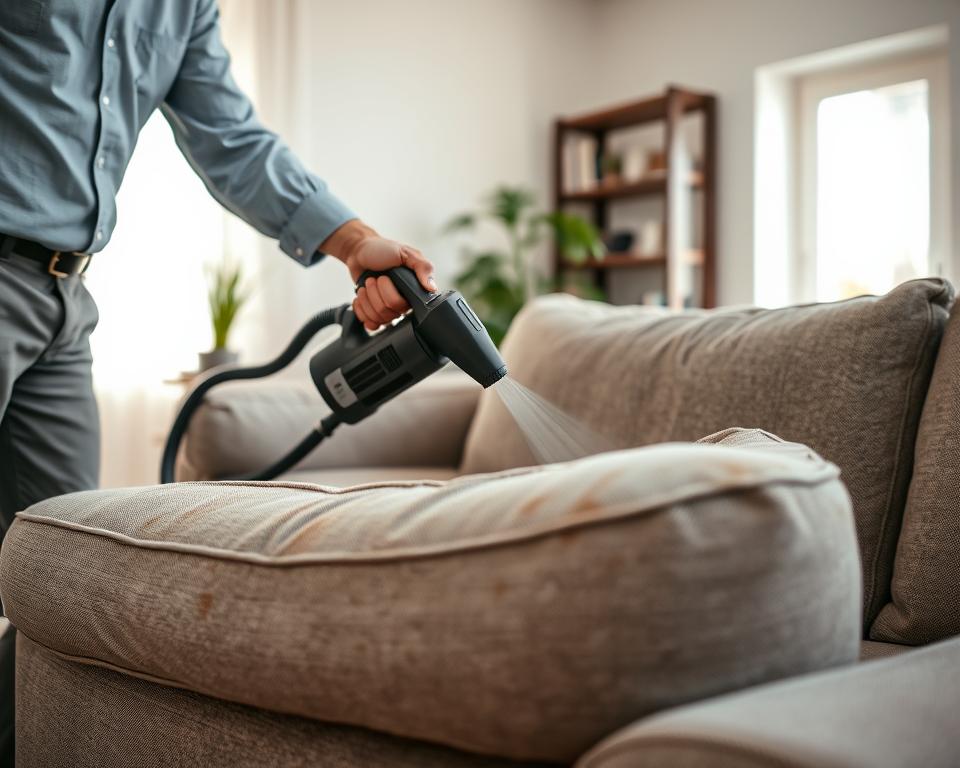
A fabric sofa may look clean, while dust, crumbs, and pet hair hide deep in its seams. Regular fabric sofa cleaning removes this buildup before it dulls the fabric or traps odors. It can also leave your sofa feeling fresher and more comfortable.
Vacuum your sofa once a week, and blot spills as soon as they happen. Before using water or trying hot water extraction, check the upholstery cleaning code on the care label. The right method depends on your sofa’s fabric.
Key Takeaways
- Vacuum your sofa weekly to remove loose dirt and crumbs.
- Blot spills promptly to help prevent stains.
- Check the care label before applying water or cleaner.
- Choose a cleaning method that suits your upholstery.
- Let the sofa dry fully after cleaning.
Check the care label before using water
Before fabric sofa cleaning, check the care label or maker’s instructions. The upholstery cleaning code tells you which products and methods are safe.
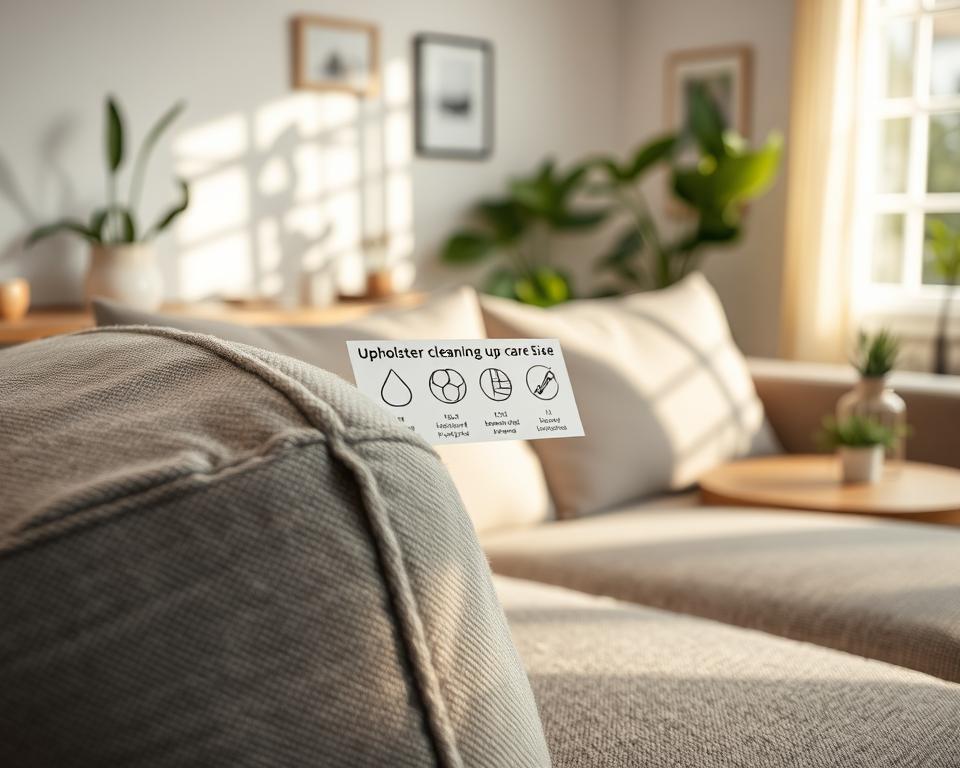
W and WS upholstery
A W code usually allows a water-based cleaner. A WS code allows water-based or solvent-based products. Test every cleaner in a hidden spot first.
S-code upholstery
An S code calls for solvent-based cleaning, not water. Take extra care with suede because water can leave marks or damage its texture.
X-code upholstery
An X code means vacuuming or professional care is safer. For delicate fabric or heavy soil, ask a professional about hot-water-extraction upholstery cleaning. Confirm that this method suits your sofa.
Inspect the sofa for damage and loose debris
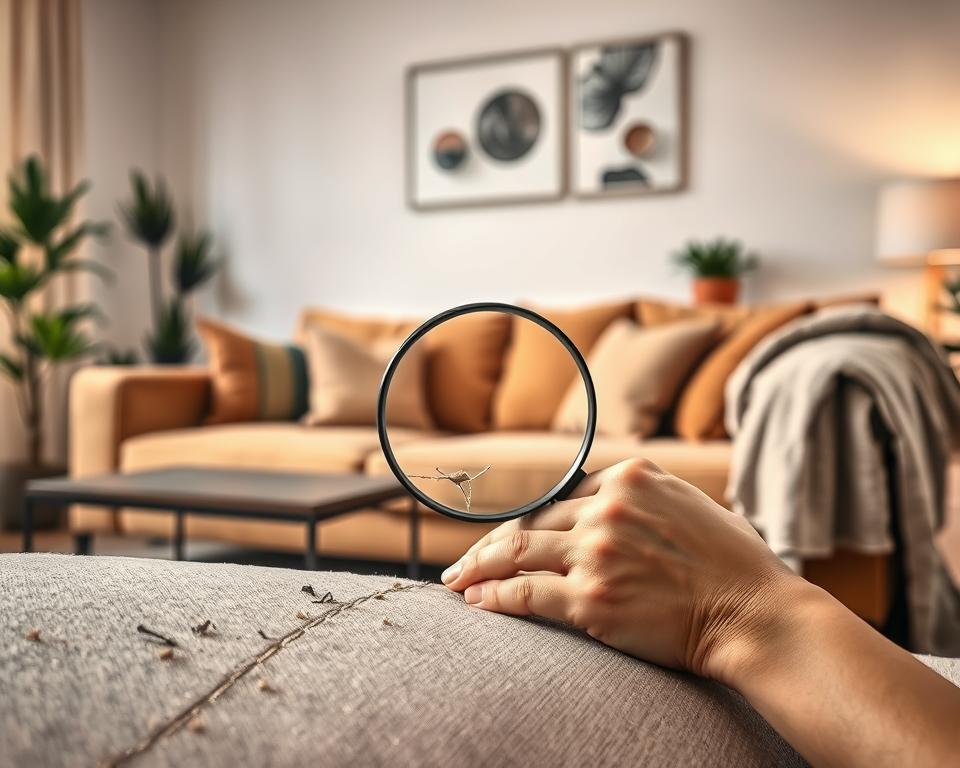
Begin your fabric sofa inspection by checking for tears, loose seams, worn patches, and crumbs. Brush away loose debris gently with your hand; pressing it into the fabric can make cleaning harder. Record each stain’s size, type, and age before choosing a spill treatment.
For a fresh spill, blot it gently with a clean, lightly damp white or pale cloth. Don’t rub, because rubbing can spread the stain or lift fabric dye. A colorfastness test in a hidden spot can reveal color transfer before cleaning a larger area.
Gather the right cleaning supplies
Set out a vacuum, clean white cloths, and a soft-bristled brush. Choose upholstery cleaning supplies that match your sofa’s care label and fabric.
A neutral detergent, upholstery spray, dry foam, or concentrated cleaner may suit different fabrics and messes. Read each product label and follow its directions.
Avoid chlorine-based cleaners and laundry detergent powder. They may fade or damage delicate fabrics, including velvet and suede. Use an enzymatic detergent only when its label says it is safe for your sofa fabric.
Vacuum every fabric surface thoroughly
Begin with a clean, dry sofa. Use an upholstery attachment to vacuum the seat, back, sides, and cushions. Lift removable cushions to reach crumbs and dust in the gaps.
For effective dust and debris removal, use a crevice tool along seams and around buttons. Move slowly so the vacuum lifts hair and grit without pulling the fabric.
Make sofa vacuuming part of your weekly upholstery care. Regular passes keep loose dirt from settling deeper into the fabric before cleaning.
| Area | Tool | How to vacuum |
|---|---|---|
| Flat fabric panels | Upholstery attachment | Move in slow, overlapping passes. |
| Seams and gaps | Crevice tool | Follow the edges to lift trapped crumbs and dust. |
| Removable cushions | Upholstery attachment | Vacuum both sides and the space beneath them. |
Mix a gentle cleaning solution
For light fabric sofa cleaning, make a neutral detergent solution with 1 tablespoon of neutral detergent and 1 liter of warm water. Stir until blended. Use a lightly damp cloth, and avoid soaking the fabric.
For odor neutralization, some care guides include 1 tablespoon of white vinegar in the mix. Check product labels before combining cleaners, and use vinegar only if the sofa’s care instructions allow it.
| Need | Option | How to use it |
|---|---|---|
| Light surface cleaning | Warm water and neutral detergent | Apply with a lightly damp cloth. |
| Odor neutralization | Baking soda | Sprinkle on dry upholstery, wait 15 to 30 minutes, then vacuum it up. |
Test the solution in a hidden spot
Before cleaning the whole sofa, begin the hidden-area upholstery test on its back or underside. Dab a little solution there, then let it sit for a few minutes. Blot the spot with a clean white cloth.
Look for color transfer, fading, or changes in the fabric’s texture. This colorfastness test can reveal problems before they reach a visible area.
Follow the upholstery care instructions on the label and check the maker’s guidance. Suede can be sensitive to water, so avoid a damp solution unless the instructions allow it. Wait for the test spot to dry before continuing.
Clean the fixed upholstery in small sections
Use a clean cloth dampened with the approved solution. Gently wipe one small area at a time. For fabric sofa cleaning, use light strokes and avoid soaking the fabric. A little moisture helps loosen dirt without making the sofa slow to dry.
For stain removal, use gentle upholstery cleaning to spread solution’s foam over the spot with a cloth or soft brush. Do not scrub; it can spread the stain or harm the fibers. Blot the area with a dry cloth to lift away residue.
Wash removable cushions and covers safely
Check the upholstery care label or manufacturer’s instructions before washing. Removable sofa covers may look machine washable, but some fabrics need another method.
Follow the cleaning method listed for your upholstery. Handle inserts gently, and avoid soaking them because extra water can damage filling and slow drying.
For safe fabric washing, let the care instructions guide every step. If the label is missing or unclear, contact the manufacturer before washing the cover or cushion.
| What you’re washing | What to check | Careful approach |
|---|---|---|
| Removable cover | Cleaning method on the upholstery care label | Use a washer only if the instructions allow it |
| Cushion insert | Manufacturer’s care instructions | Avoid excess water and follow the listed method |
Treat common fabric sofa stains
Quick action can keep a small spill from setting. Blot spills with a clean cloth or paper towel; rubbing may drive stains deeper or spread them. Check the care label and test any approved cleaner on a hidden spot first.
Grease and oil stains
For grease stain removal on suede, cover the spot with baking soda. Leave it for about 20 minutes, then brush it away. Check the sofa’s care instructions before using this method on other fabrics.
Food and drink spills
Blot food and drink spills at once. For water-safe fabrics, use a lightly damp cloth and a small amount of neutral detergent. Treat wine stains carefully because the proper method depends on the fabric and cleaner label.
Pet stains and odors
Use a fabric-approved cleaner for pet stains, and follow its label. An enzymatic detergent may help remove pet messes when approved for your upholstery. For odor neutralization, baking soda can absorb unpleasant smells; follow fabric care guidance before using it.
Remove excess moisture and soap residue
After cleaning, press a dry, clean cloth against the fabric to lift moisture and soap. Switch to a fresh cloth when the first feels damp. This excess moisture removal step helps prevent the sofa from staying wet.
For suede cleaned with foam, gently wipe away the foam with a cloth dampened in warm water. This light upholstery rinsing can help with soap residue removal without soaking the fabric.
Never pour water directly onto the sofa. Use only a lightly damp cloth, and blot instead of scrubbing.
Dry the sofa completely to prevent mildew
Let the sofa dry in a well-ventilated room before sitting on it. Open windows or use a fan to move air. Good airflow helps prevent mildew and musty odors.
After you blot away excess moisture, upholstery drying may take about four to six hours. Clean in the morning when possible, giving the sofa longer to dry before evening.
A professional cleaner may use hot water extraction to wash fabric and remove soil. Ask which method they use, and confirm it suits your sofa’s care label.
| Drying step | What to do | Why it helps |
|---|---|---|
| Blot the fabric | Press a clean, dry cloth over damp areas. | Removes extra moisture and can shorten drying time. |
| Improve airflow | Open windows or run a fan nearby. | Moves humid air away from the sofa. |
| Check before use | Feel the cushions, seams, and undersides. | Helps ensure hidden areas are dry, too. |
Keep your fabric sofa fresh after cleaning
Make weekly sofa maintenance part of your routine. Vacuum cushions, seams, and crevices to remove dust, hair, and crumbs before they settle.
For a deeper refresh, clean the sofa every one to three months. Plan thorough cleaning every six months to a year. Pets, kids, and daily use may require more care; blot spills and address odors or heavy soil quickly for upholstery odor control.
For stubborn stains, delicate fabric, or severe soil, consider professional upholstery cleaning. A trained cleaner can wash and extract dirt and may help reduce lingering odors.




