

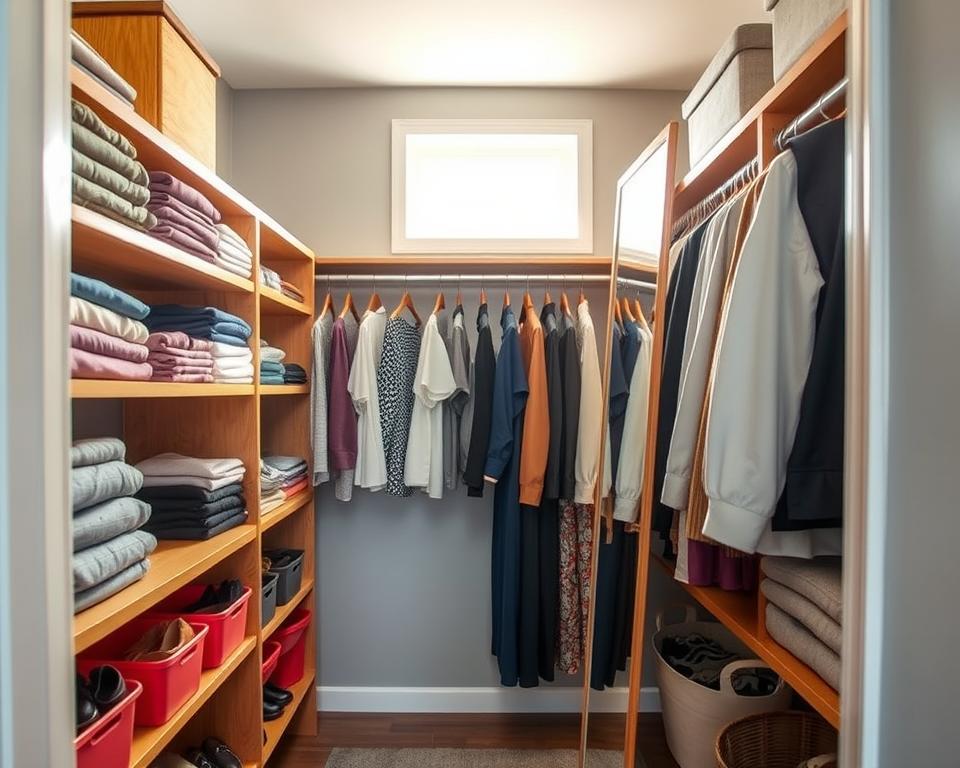
A closet can feel packed even when it has room to spare. Often, the real problem is seeing, reaching, and putting away clothes, not closet size.
Small closet organization starts with a simple method, clear categories, and storage that fits. You may not need a renovation or new furniture to create more room.
With a few smart changes, organization for a small wardrobe can make getting dressed easier. These space-saving closet ideas use what you have and give every item a clear place.
Key Takeaways
- A crowded closet may need better organization, not more space.
- Clear categories make clothes easier to find.
- Storage should fit the closet’s size and shape.
- You can improve your closet without a renovation.
- A clear place for each item helps keep clutter down.
Measure the closet before moving a single item
Use a tape measure to record rod length, shelf depth, drawer size, and open wall and door areas. These small closet measurements help you choose organizers that fit without crowding the space.
Map the closet layout, including the distance from the rod to the floor and nearby shelves. The Portofino 5-in-1 hanging organizer from Zanor is 34 centimeters long and fits over an existing rod without tools. Check that it hangs freely with clothes in place and does not block a shelf or door.

Good vertical space planning starts by measuring from top to bottom. Record the height above the rod and below the shelves, giving storage choices room to hang, open, and move.
Empty the closet and sort clothes by use
Start your closet reset by removing every garment, box, and accessory. Empty space helps you see what you own and plan small closet organization carefully.
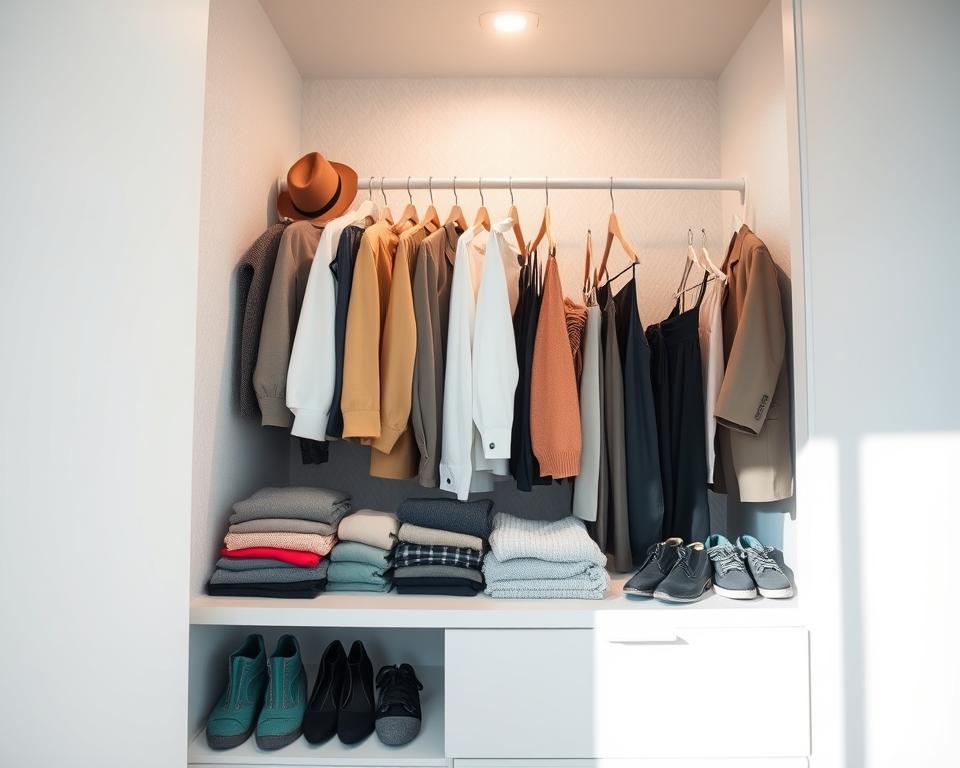
- Keep and wear regularly
- Donate items in good condition
- Discard worn or damaged pieces
- Store clothes that are out of season
This visual reset can reveal duplicates and forgotten favorites. Removing clothes you have not worn in over a year or that no longer fit can help. Category-based sorting can remove duplicates and clothes you already own in multiples, freeing up to 30 percent of closet space in many cases.
Decide what deserves limited closet space
Keep your main closet focused on clothes you wear now. Zanor suggests removing items untouched for over a year, clothes that no longer fit, and duplicates you rarely wear.
Make closet editing easier by sorting these clothes into three groups: donate, discard, or store for another season. This decluttering unused clothes plan frees room without making you give up useful items.
Place off-season pieces in seasonal clothing storage, such as a clean bin under the bed. Recheck your choices when weather changes, so your closet matches what you will wear next.
| Clothing type | Best next step | Why |
|---|---|---|
| Good condition, no longer worn | Donate | Give useful clothes a new home |
| Damaged or heavily worn | Discard or recycle | Keep unusable pieces out of storage |
| Useful in another season | Store in a clean, dry bin | Save closet space for current outfits |
| Fits and gets regular use | Keep in the main closet | Make everyday choices easy to reach |
Pick organizers that fit your closet’s actual dimensions
Measure shelves, drawers, and hanging space before shopping. Check each item’s size, too. A proper fit keeps clothes visible and prevents wasted space.
Use slim hangers to reclaim hanging space
Slim velvet hangers use less room than bulky styles. Leave space between garments, so you can see and reach each one.
Add shelf dividers and stackable bins
Shelf dividers keep folded piles from spreading. Shelf organizer bins hold categories like sweaters or bedding. Give each clothing type its own zone, apart from accessories.
Choose drawer inserts for small essentials
Drawer inserts give socks, belts, and other small items a set place. Choose inserts that fit without crowding the drawer.
| Organizer | Best for | Fit check |
|---|---|---|
| Slim velvet hangers | Hanging clothes | Leave room to slide garments along the rod |
| Shelf organizer bins | Folded items and bedding | Measure shelf depth and height |
| Drawer inserts | Small essentials | Match the insert to drawer dimensions |
Create zones for the way you get dressed
Create clothing zones around your daily routine. Keep shirts, T-shirts, pants, dresses, and accessories in fixed spots. This simple system helps you find what you need and put each item back.
Keep everyday clothes at eye level
Place your most-worn pieces where they are easy to reach. Grouping similar items supports category-based closet organization and helps you get dressed with less searching.
Place occasional items higher up
Move clothes you wear less often to upper shelves. Store bedding separately from clothing, preferably up high, so it does not crowd your daily wardrobe.
Group complete outfit categories together
Arrange items by type, then use color-coded clothing within each group. A gradual color order makes pieces easier to spot and helps you put outfits together quickly.
Double your hanging space without overcrowding clothes
Layered hangers improve vertical space utilization by holding several garments where one hanger usually fits. Zanor’s Portofino organizer is a retractable 5-in-1 system that fits an existing closet rod without tools. It measures 34 centimeters and combines reinforced stainless steel with durable plastic.
Each layer supports up to 1 kilogram and pulls out, letting you reach one pair of pants without moving others.
This kind of hanging storage for small closets can free rod space for shirts, blazers, and dresses that wrinkle easily. Use layered hangers for pants and other pieces that can hang close together. Kit prices are listed in Brazilian reais (R$):
| Kit size | Price per unit |
|---|---|
| 2 units | R$49.50 |
| 4 units | R$39.98 |
| 6 units | R$34.98 |
| 8 units | R$34.36 |
| 10 units | R$33.99 |
Choosing a larger kit lowers the listed per-unit price. Keep a little space between garments so vertical space utilization does not reduce easy access.
Fold bulky and delicate items to save shelf space
Use the vertical clothing fold method for T-shirts and sweatshirts. Zanor recommends folding each piece so it stands upright in a drawer or on a shelf. You can see every item from above without pulling apart a tall stack.
Organize folded clothing storage by type, such as tees, sweaters, and sleepwear. This keeps compact closet shelves neat and makes needed items easier to find.
Keep sheet sets together by tucking sheets and pillowcases inside one pillowcase. The set stays easy to grab and simple to put away.
Give shoes a defined home outside the clothing area
Keep shoes outside the clothing area to free shelves and hanging space for clothes. A separate shoe zone helps you find pairs and put them away.
For small closet shoe storage, group pairs by use or season. Keep daily shoes within reach, and store off-season pairs together elsewhere.
An organized closet floor stays clear when every pair has a set place. Keeping pairs together helps you see which shoes you wear most.
| Shoe group | Where to keep it | Why it helps |
|---|---|---|
| Everyday pairs | Near the closet entrance | Easy to grab when getting dressed |
| Work or occasion shoes | Together in the shoe zone | Keeps less-used pairs distinct |
| Off-season shoes | Outside the clothing area | Leaves nearby space for current needs |
Keep accessories visible without using extra shelves
Use hooks inside the closet door for belts, scarves, and bags. This visible accessory storage keeps shelves free for clothes. Hanging closet organizers can hold these items, too.
Group accessories by type, using clear accessory categories for each item. This makes items easier to find and keeps small things from spreading across the closet.
Use the closet door and empty wall space
Use hooks or a hanging organizer inside the door. This closet door storage keeps belts, scarves, and bags visible without using shelf room.
Also, use unused wall space, but make sure racks do not block the door. Keep daily clothes easy to reach. This vertical space utilization adds storage while keeping the closet easy to use.
Zanor recommends reserving upper shelves for less-used items, such as spare bedding. Store daily items within easy reach.
| Storage spot | Good for | Placement tip |
|---|---|---|
| Inside the door | Belts, scarves, and bags | Use hooks or a hanging organizer |
| Open wall space | Light accessories | Keep the door and clothing clear |
| Upper shelf | Spare bedding | Save it for items you rarely use |
Rotate seasonal clothing before the closet gets crowded
At each season change, move coats and other out-of-season clothes out of your main closet. This seasonal closet rotation gives clothes you wear now more room and keeps daily choices easy to see.
Store off-season clothing in labeled boxes or vacuum storage bags on a high closet shelf or in another room. Ordine bags, described by Mix Utilidades, remove air, compact items, and help protect clothes, blankets, and comforters. Zanor says vacuum bags cut bulky winter coats’ volume up to 70 percent, shielding clothes from dust and moisture.
Fix the storage problems that make the system fail
Clutter often starts when clothing categories mix. Pants, shirts, bedding, and accessories become harder to find when they share one space. Give each group a set place, and return items there after use.
Use a simple replacement rule to limit new buildup: when a new item comes in, move a similar one out. This keeps closet organization maintenance manageable without a major clear-out.
During a seasonal closet review, check what you still wear and remove items that no longer fit your routine. Return clothes to their assigned spots instead of leaving them in a temporary pile.
Keep your small closet easy to maintain every day
A small closet organization routine keeps clutter from returning. Put each item back after wearing or washing it. Putting clothes away now is easier than sorting a pile later.
Keep clothes you use most where you can see and reach them. Clear places make your organized wardrobe work better and shorten the time needed to get dressed.
Make everyday closet maintenance part of each seasonal change. Review what you wear, move off-season pieces, and follow the replacement rule. Before adding something new, let go of something you no longer need.




