

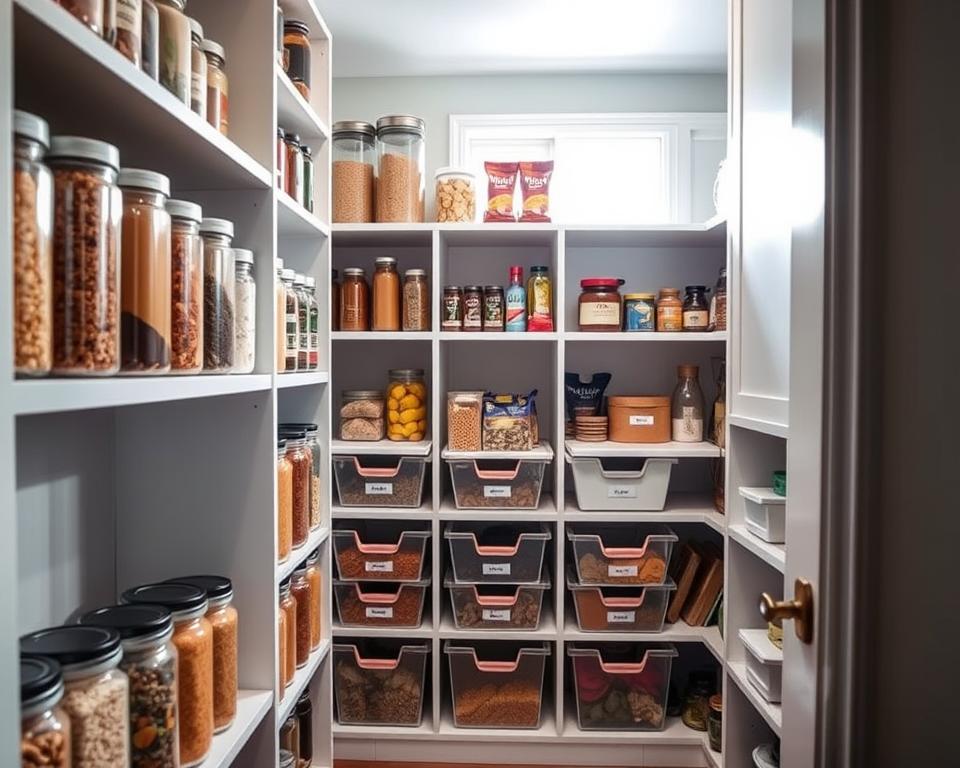
The space above pantry shelves can work like another shelf. With small pantry organization, smart dividers and adjustable storage create more room without changing your kitchen’s layout.
Start with vertical space optimization and a few simple changes. A better setup can make daily cooking and restocking easier.
Key Takeaways
- Use empty space above and below shelves.
- Choose storage that fits your pantry’s size.
- Group similar foods to make them easier to find.
- Keep daily staples within easy reach.
- Small changes can improve storage without a remodel.
Measure the pantry before buying storage products
Measure each shelf’s width, depth, and usable height before shopping. Check for trim, hinges, or other features that take up space. These notes can stop organizers from blocking the door or leaving awkward gaps.
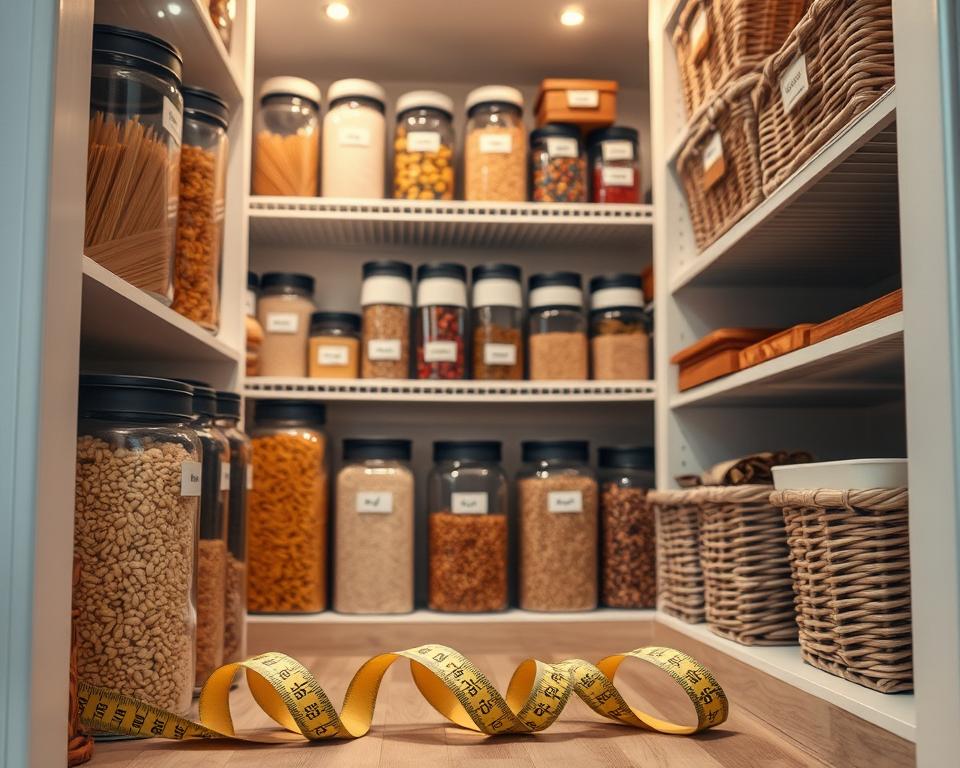
Compare each product’s listed dimensions with your measurements, including handles and lips. For small pantry organization, adjustable shelves and flexible options help storage fit changing needs.
Remove expired food and duplicates first
Before choosing storage spots, check package dates and remove expired food. For simple expiration date tracking, group items with similar dates so older packages stay easy to spot.
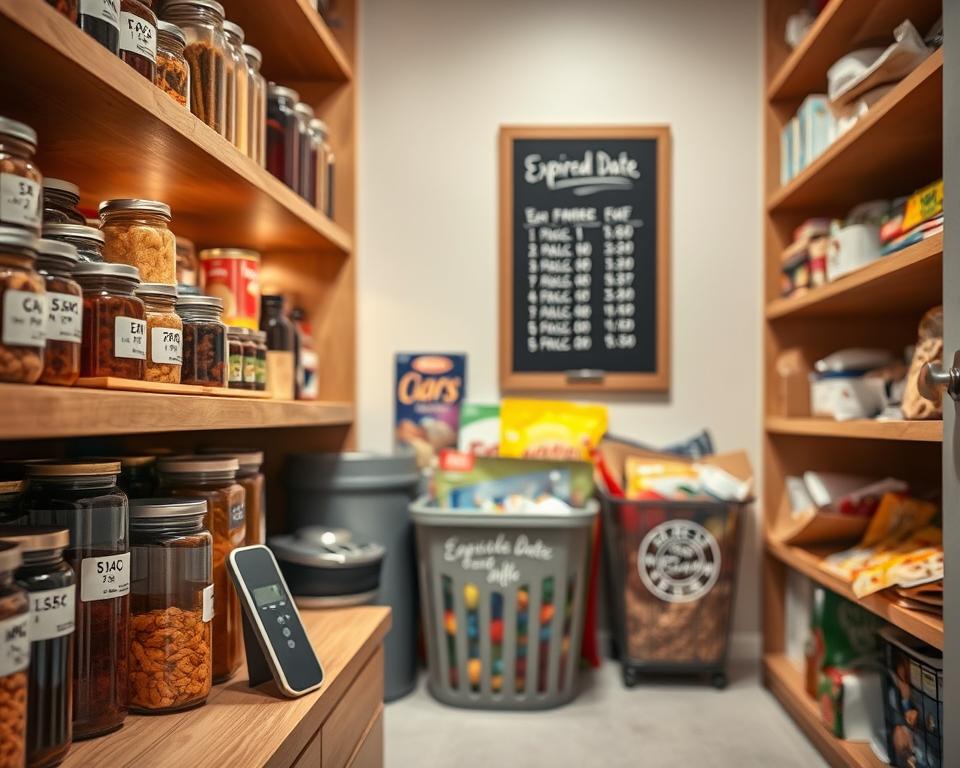
Gather duplicate cans, boxes, and jars in one place. Place older items in front and newly purchased items behind them to support stock rotation.
This quick sort shows what you have before you assign pantry zones. It can help prevent forgotten food from getting buried on a shelf.
Group pantry items into practical zones
Give each food type a regular home. Keep breakfast items together, baking staples on one shelf, and snacks within easy reach. These category-based storage zones make groceries easier to find and store.
Use small bins or shelf dividers to keep each group together. A clear setup makes small pantry organization easier, even when shelves are tight.
Use vertical space between shelves
Look for open space above cans, jars, and short packages. Use that gap for another food layer. Stackable bins and shelf risers make vertical space optimization simple and keep items visible.
If your pantry allows, move a shelf to fit taller items below and shorter goods above. Adjustable shelves help you use space better without crowding each area.
| Pantry space | Practical option | Works well for |
|---|---|---|
| Open space over short items | Stackable bin or riser | Cans, jars, and small packets |
| Shelf height can change | Adjust the shelf position | Tall bottles or cereal boxes |
Pick organizers that fit the pantry, not the other way around
Measure every shelf and the pantry opening before shopping. Each organizer must fit the shelf and the path in and out. For small pantry organization, a few well-chosen pieces may beat a full set.
Check each shelf’s height, depth, and access. With adjustable shelves, note their current spacing and limits for moving them. Choose clear organizers when quick visibility would help.
Stackable risers for cans and jars
Risers lift a back row into view. Check their width and height against the shelf and stored items.
Pull-out bins for deep shelves
Bins group packets and small items. Measure the shelf depth and opening so each bin slides out without catching.
Turntables for bottles and condiments
A turntable can help with bottles that are hard to reach at the back. Check its diameter and leave room for bottles to turn.
| Organizer | Check before buying | Good fit for |
|---|---|---|
| Stackable riser | Shelf width and clearance above | Cans and jars arranged in rows |
| Pull-out bin | Shelf depth and pantry opening | Grouped packets or small items |
| Turntable | Diameter and turning space | Bottles and condiments |
Make deep shelves easier to reach
Deep shelves can hide food at the back. Place cans, packets, or snacks in bins that slide forward. This pull-out storage helps you see your food and reach items without moving everything in front.
Keep similar foods together in category-based storage zones, such as baking supplies or canned goods. Give each bin one clear purpose, so you can find items and return them easily.
Put the pantry door and walls to work
A pantry door or open wall can hold light items, such as spice packets, snack bags, or measuring cups. Slim pockets and narrow shelves support vertical space optimization without crowding the main shelves.
For small pantry organization, choose storage that keeps shelves clear and preserves safe access. Make sure the door opens freely and stored items remain easy to reach.
Transfer only the foods that benefit from containers
Decanting every package can create extra work without saving space. Move food into containers when they make items easier to spot, reach, or fit on a shelf. Clear organizers let you see contents at a glance.
For bulk food storage, choose containers that match the amount you keep and the available space. Keep other foods in original packages when they are easy to handle and store.
Store awkward packages without wasting shelf space
Group odd-shaped bags and boxes by type, such as baking goods or snacks. Category-based storage zones make items easier to find and stop loose packages from spreading across shelves.
Use a bin, divider, or versatile drawer for each group. Choose one that keeps packages together without hiding items behind them. This method also works well for bulk food storage.
Keep everyday foods at eye level
Place foods you use often on shelves that are easy to see and reach. Put older packages in front of newer ones to support stock rotation and use what you have.
Check dates when you grab or store food. This simple habit makes expiration date tracking part of regular pantry use and helps you find items needing attention.
Label zones and set simple restocking limits
Mark category-based storage zones for snacks, baking supplies, and canned goods. Clear labels help everyone return items to the correct spot.
Set a practical limit for foods that often pile up. When you restock, check expiration dates and move older items forward. This stock rotation makes expiration date tracking easier.
Keep the extra space with a quick weekly reset
Spend five minutes each week returning food to its zone. Place misplaced items on the shelf, in the bin, or in the clear organizers where they belong. This easy habit helps your small pantry organization last.
Check dates while putting food away. Move older cans, jars, and boxes to the front, so you use them first. Regular stock rotation can also help you find food that needs replacing.
A quick reset keeps shelves easy to scan and daily routines simple. You can keep the extra space without a remodel or major cleanup.




