

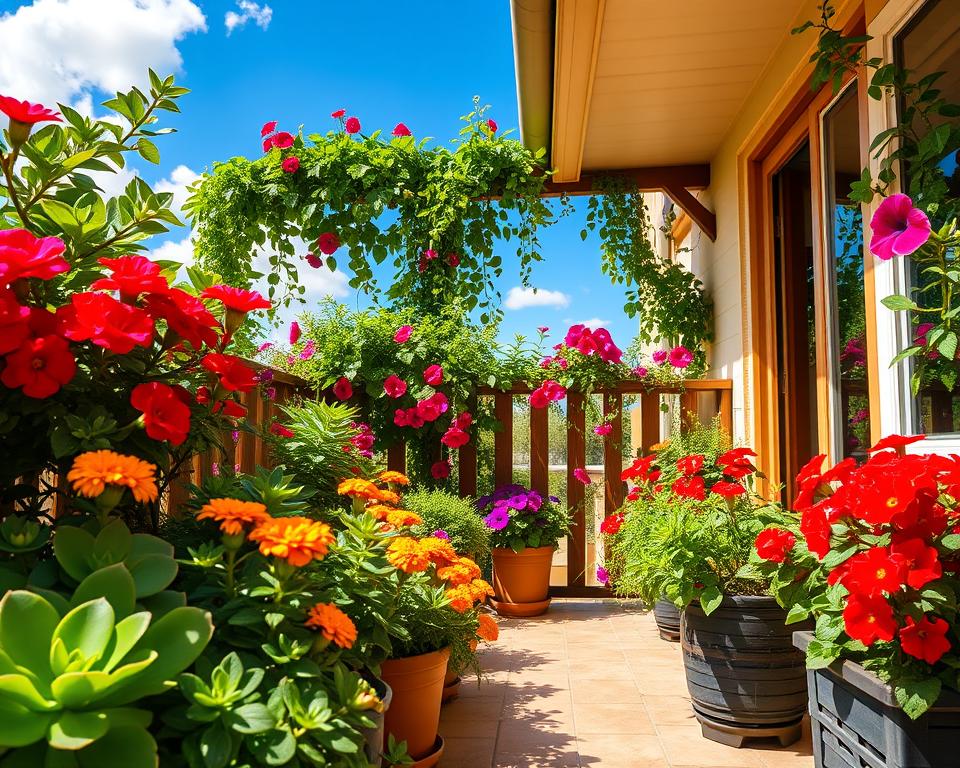
Many flowering plants need five to six hours of direct sun each day to bloom well. This bright, warm light can turn a balcony into a garden with the right plants.
These plants for sunny balconies include colorful flowers and hardy succulents. Explore sun-loving balcony plants and strong-sun-tolerant species for your outdoor space.
Key Takeaways
- Many sun-loving plants need five to six hours of direct light to flower well.
- Portulaca and some succulents can tolerate full sun.
- Cacti and succulents store water, which helps them handle dry conditions.
- Match plants to your balcony’s light and available space.
How much sunlight does your balcony actually get?
Watch your balcony at different times of day. Count the hours when sunlight reaches the plants, not only the railing or floor. Walls, trees, and nearby buildings can cast shade that shifts as the sun moves.
Most plants for sunny balconies need at least six hours of direct sun each day. Before choosing each pot’s location, check how much direct sunlight for balcony plants your space receives.
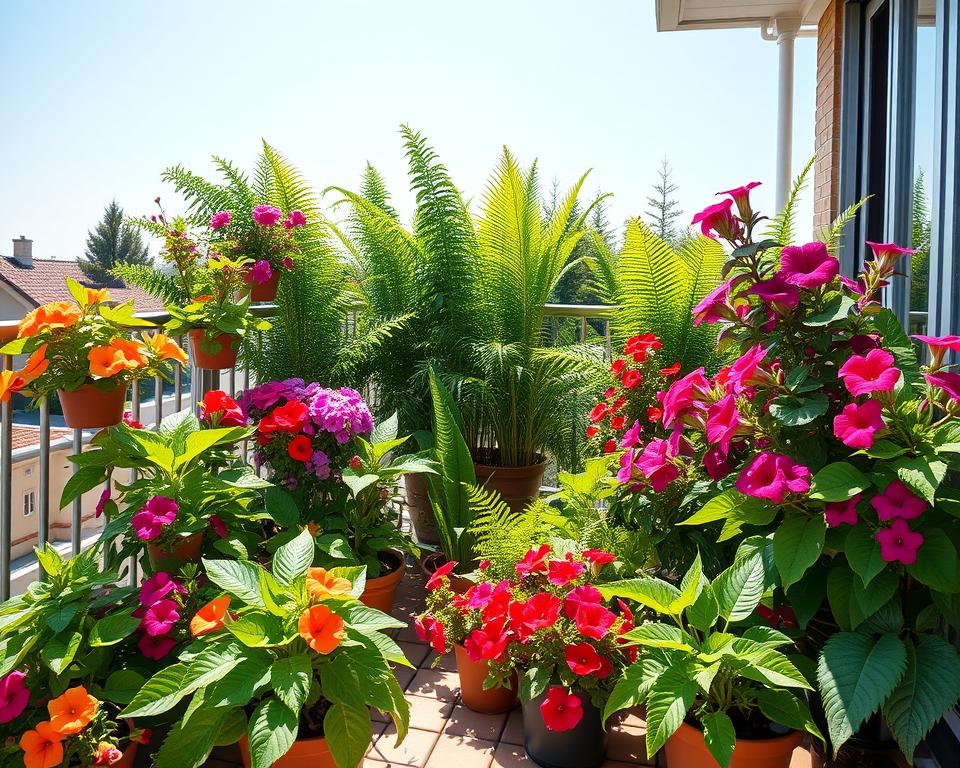
Plumeria, desert rose, and lavender need about five to six hours of direct light to flower well. Ivy prefers shade and should avoid strong midday sun. Surfinias do well with sun during part of the day, either morning or afternoon.
How to choose plants for heat, wind, and limited space
Begin with your balcony’s heat and the space available. Cacti and succulents store water, so they handle full sun and dry spells. Many species that tolerate strong sun need less water and care during hot weather.
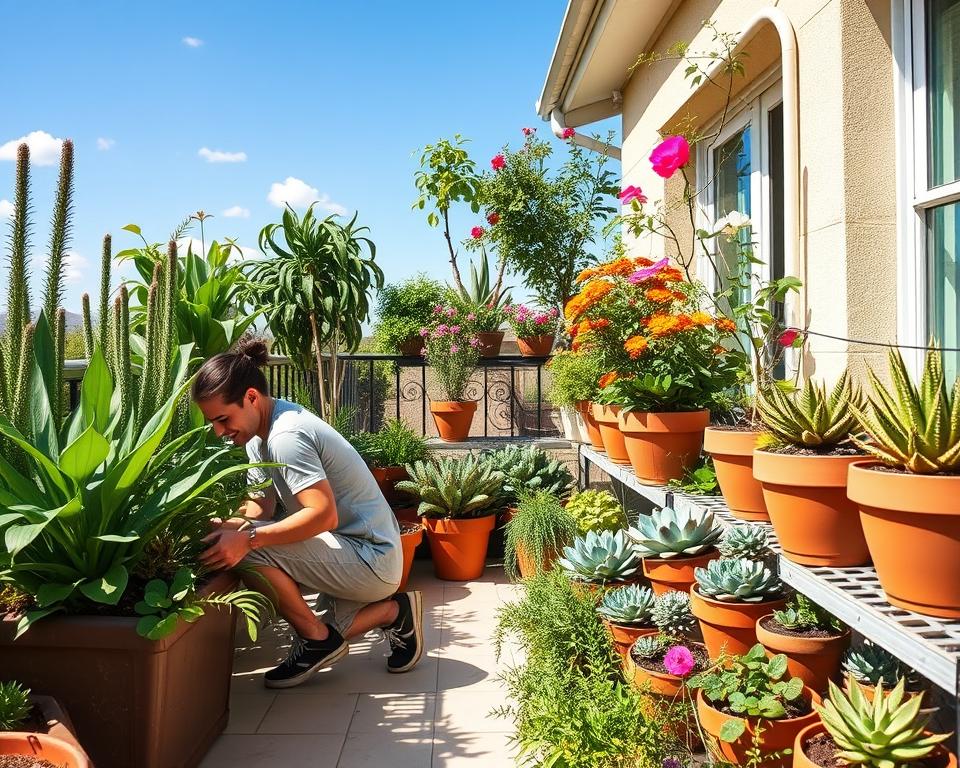
Azaleas need shelter from rain and gusts because both can damage them. Place azaleas in a protected spot, or choose a hardier plant for an exposed balcony. Protection from strong winds helps keep leaves and stems in better shape.
Check a plant’s mature size before buying. Clusia can reach 6 feet tall without pruning, while desert rose may grow 13 feet in the ground. In a pot, desert rose stays smaller, so it fits a balcony more easily.
8 plants that thrive on a sunny balcony
A bright balcony can hold bold blooms, fragrant leaves, and useful kitchen plants. These eight picks add variety, from vivid flowers to drought-tolerant choices.
Bougainvillea for bright, colorful blooms
Bougainvillea adds vivid color with its papery blooms. It creates a bold focal point among other sun-loving flowers.
Lantana for long-lasting flowers
Lantana brings clusters of colorful blooms to a balcony garden. Its bright display pairs well with softer leaves and muted plants.
Lavender for fragrance and drought tolerance
Native to the Mediterranean, lavender thrives in warm conditions and full sun. Heat can boost its fragrance and essential oil, making lavender for sunny balconies a natural fit.
Rosemary for an edible, Mediterranean touch
Rosemary adds fragrant foliage and savory flavor to balcony cooking. Try it with other aromatic herbs in pots for a small, useful garden.
For more options, consider portulaca, desert rose, geranium, and mandacaru. Portulaca handles direct sun all day, but avoid overwatering it. Desert rose prefers full sun or some direct sun and needs infrequent watering.
Geraniums flower throughout the year in direct sun. After they become established, water them less often and keep the soil moist, not soggy. Mandacaru needs daily sunlight, can grow up to 20 feet, and needs water every one to two weeks.
Which pots and potting mix work best for sunny balconies?
Choose planters with good drainage holes so extra water can escape. Waterlogged pots can harm roots, even when plants enjoy moist soil.
Use potting mix for sun plants that stays loose and drains well. Rich mix suits many flowering plants, while herbs such as rosemary need soil that does not hold too much water.
Check the soil before watering. Surfinias like steady moisture, but wait until the surface feels dry before adding more. This simple check helps plants for sunny balconies handle bright, warm days.
How to water plants exposed to direct sun
Water in the early morning or evening, when the air is cooler. During watering during heat waves, check the soil often. Water when the top feels dry, and stop before the pot becomes waterlogged.
Watering sun-exposed container plants depends on the species. Hydrangeas may need water twice a week, while desert roses need drinks less often. Keep hydrangea soil moist, but not soggy.
Portulaca and stone rose need only moderate water. Mandacaru usually needs water once every one to two weeks. Check each pot because wind and small containers can dry out faster.
When to feed, prune, and remove spent flowers
Regular feeding and light pruning support fresh growth and more blooms. For feeding balcony plants, choose fertilizer suited to the plant and follow its label. Never add more fertilizer than directed.
When pruning sun-loving plants, trim damaged or overgrown stems as needed. Clusia can reach 6 feet if left unpruned. With good care, it may produce white flowers in spring and summer.
For simple flower care, remove faded blooms when you notice them. This keeps the plant tidy and makes new flowers easier to spot. Check each plant often because bloom patterns vary.
| Task | When to do it | Helpful cue |
|---|---|---|
| Feed | Periodically during active growth | Use a fertilizer suited to the plant and follow its label. |
| Prune | As stems become damaged or overgrown | Trim lightly to manage size and encourage fresh growth. |
| Remove spent flowers | As blooms fade | Snip or pinch off old flowers to keep the plant neat. |
How to protect balcony plants from heat and strong wind
Water during summer’s coolest hours, such as early morning or evening. Check the soil first because pots dry quickly in direct sun. These steps provide protection from strong winds and help roots handle summer heat.
Place azaleas where rain and gusts cannot reach them. Lavender prefers warm, sunny spots, and extra sun can boost its fragrance. Cacti and succulents store water, making them useful heat-tolerant balcony plants and species that tolerate strong sun.
| Plant | Balcony care | Best spot |
|---|---|---|
| Azalea | Shield from heavy rain and gusts | A sheltered corner |
| Lavender | Give it warmth and direct sun | A bright, sunny spot |
| Cactus or succulent | Let the soil dry between waterings | A hot, sunny area |
How to arrange eight sun-loving plants in a small space
Use layers in balcony container gardening to fit eight plants without crowding the balcony. Set large pots on the floor and smaller ones on shelves. Use hanging plants for planters to keep space open below.
Let surfinias spill from hanging baskets, and train ivy to trail or climb along a support. Grow clusia in a decorative pot, while ageratum fills a planter or small bed. Place aromatic herbs in pots near the door for easy picking.
Keep each plant where it gets enough sun and air. Leave room to water and prune, and move pots when a spot becomes too hot or windy.
Start with the plant that matches your balcony’s sun and space
Watch your balcony’s light through the day before choosing plants for sunny balconies. Six or more hours of direct light suits full-sun plants. Clusia handles full sun or partial shade, while ivy and surfinias need relief from harsh midday rays.
Choose sun-loving container plants that fit your space and handle heat and wind. Lavender, rosemary, and bougainvillea add scent, color, or fresh herbs without taking over a small balcony.
Use well-draining planters and a loose potting mix so extra water can escape. Check the soil in hot weather, and water when it starts to dry. A good match for your light and routine helps your balcony garden thrive.




