

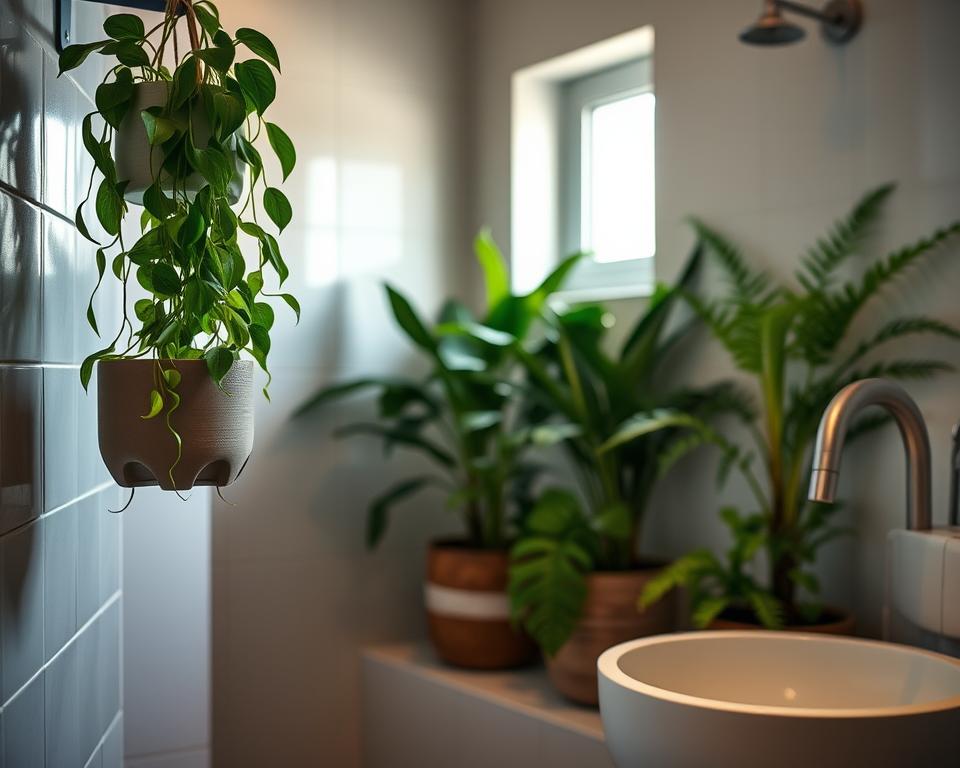
A ZZ plant stores water in thick underground stems. This helps it handle long gaps between waterings in a dim bathroom. Its botanical name is Zamioculcas zamiifolia, and it is one of several hardy indoor plants for less-than-ideal light.
Low-light bathroom plants add a fresh touch beside cool tile, shiny fixtures, and mirrors. Snake plants and peace lilies are popular choices, while tropical shade plants bring leafy color to a humid space. Some plants can absorb small amounts of airborne compounds, but they do not replace good ventilation.
Key Takeaways
- Choose plants that tolerate dim light and missed waterings.
- ZZ plants, snake plants, and peace lilies are good options.
- Bathroom humidity may suit many tropical shade plants.
- Even hardy indoor plants need some light to stay healthy.
- Plants add color and contrast to tile and metal fixtures.
How much light does your low-light bathroom actually provide?
Check the room during the day with the lights off. See whether sunlight reaches the space, even briefly. Notice whether the room feels bright or dim. A frosted window or curtain can soften sunlight into indirect light for houseplants. A bathroom without a window needs artificial light and may have less usable light than expected.
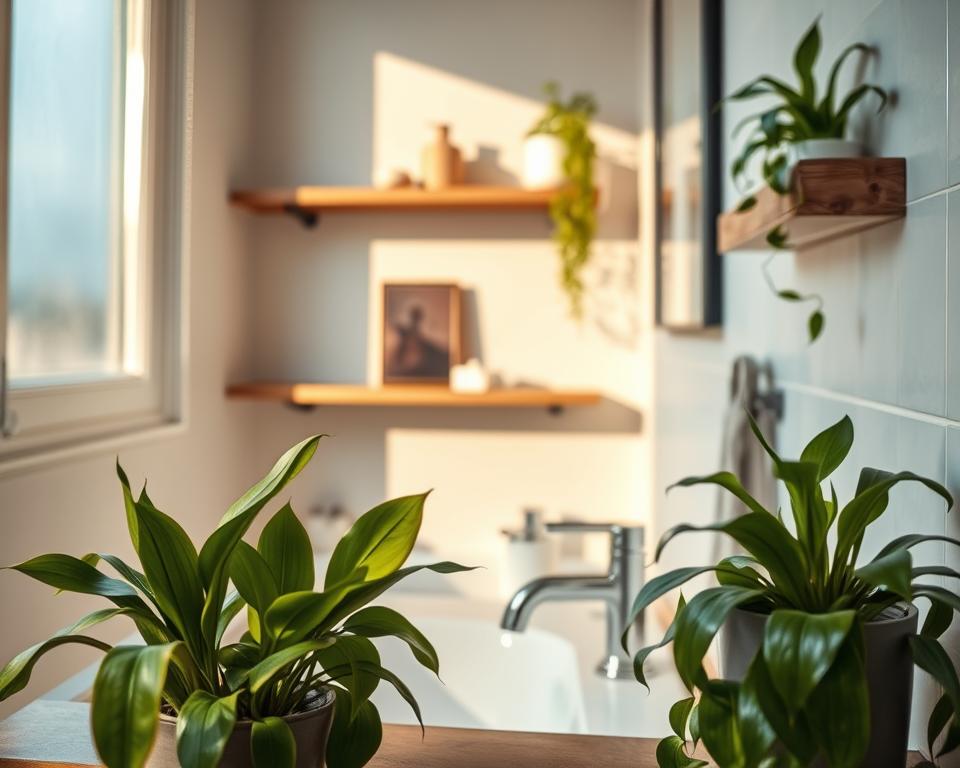
Low-light bathroom plants, such as pothos, snake plants, and peace lilies, can handle dimmer spots. American ferns can also tolerate low light or partial shade. A maidenhair fern suits a well-lit bathroom better, with more soft, indirect light.
Notice how much daylight the room gets, not just how bright the bulbs seem at night. Bathroom lighting helps you see and care for plants, but it cannot show how much natural light reaches them.
Hardy plants that tolerate dim bathroom conditions
Dim bathrooms can still support hardy houseplants. Choose plants that handle low light, and adjust watering for the room.
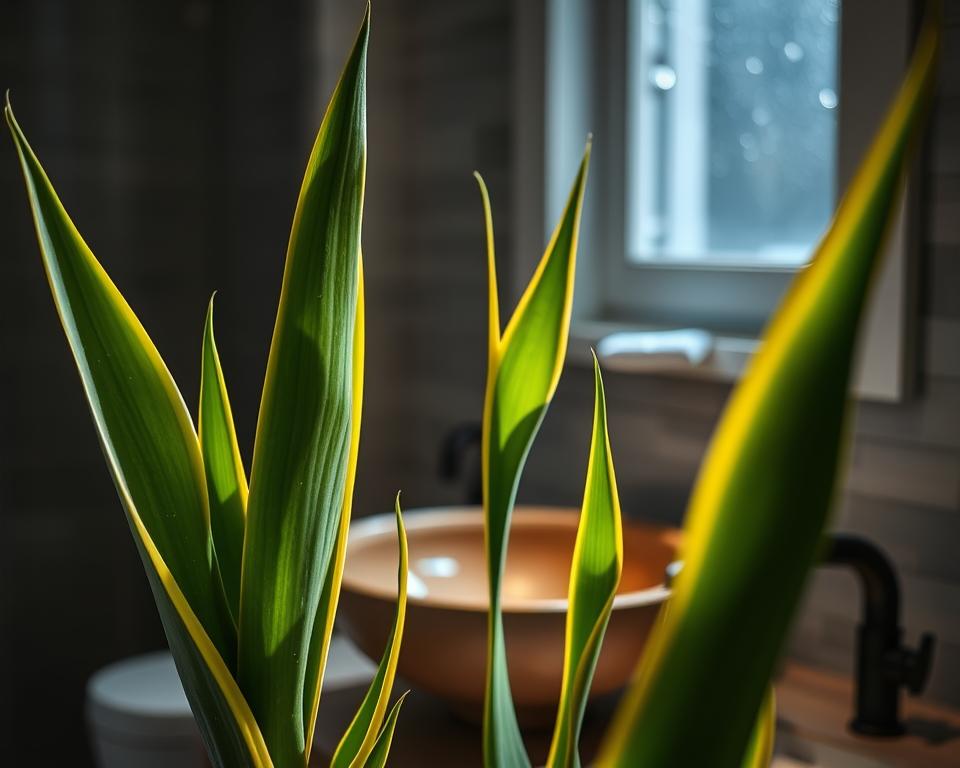
Snake plants and ZZ plants for the darkest corners
A snake plant for low light handles humid air and needs water about every 10 to 15 days. Check soil and humidity first, because damp conditions can slow drying.
A ZZ plant for humid spaces suits a dim corner. Let its soil dry before watering, and choose a pot that drains well.
Pothos and heartleaf philodendrons for shelves and hanging pots
Pothos for bathrooms can trail from a hanging pot or shelf. It tolerates low light, but indirect light helps it grow better.
The heartleaf philodendron ‘Brasil’ suits partial shade. Let its stems trail, or guide them up a support as they grow.
Cast iron plants and Chinese evergreens for steady, low-light growth
Cast iron plants and Chinese evergreens suit dim rooms. Their leafy forms add a full, calm look to a bathroom without needing a sunny spot.
Which plants can handle a bathroom with no window?
Snake plants and ZZ plants are practical plants for windowless bathrooms because they tolerate very low light. A ZZ plant for humid spaces can handle bathroom moisture, but let its soil dry between waterings.
Some ferns grow in dim rooms, but they need more care. An American fern in a windowless bathroom needs evenly moist soil and indirect light or partial shade. No plant can live indefinitely without light.
Use a grow light or move plants to a brighter spot for part of each day.
How humidity, temperature, and ventilation affect plant choice
Bathroom humidity can slow potting mix drying, so check the soil before watering. Many tropical shade plants enjoy moist air, but their roots still need well-draining soil. A ZZ plant handles moderate humidity, but never leave its pot sitting in water.
Good humidity and ventilation for plants balance moist air with room to breathe. Keep leaves away from cold drafts, especially maranta, which prefers high humidity and steady warmth. Air movement can reduce stuffiness, but do not place plants in a direct draft.
Temperature matters, too. Check your bathroom’s usual range, especially near a window, vent, or exterior wall. The table below can help match a plant to the room.
| Plant | Temperature range | Humidity and care notes |
|---|---|---|
| ZZ plant | Not specified | Prefers moderate humidity; keep soil from becoming waterlogged. |
| Maranta | Not specified | Prefers high humidity; protect it from cold drafts. |
| Anthurium | 64–77°F (18–25°C) | Keep the room within its preferred temperature range. |
| Phalaenopsis orchid | 64–77°F (18–25°C) | Choose a spot with a steady, suitable temperature. |
| Dracaena fragrans | 64–79°F (18–26°C) | Best suited to a bathroom that stays in this range. |
| Lucky bamboo | 64–86°F (18–30°C) | Tolerates a broader warm range than the other listed plants. |
Where to place each plant in a small bathroom
Use vertical space to keep counters clear. Pothos can trail from a hanging pot or climb a support, while heartleaf philodendron ‘Brasil’ suits a shelf or pole. Ferns and spider plants suit hanging bathroom plants because their leaves spread without crowding a sink.
For shelves, niches, and tight corners, try compact peperomia or an arrowhead plant. These small-bathroom plants fit neatly in spots suited to plants for indirect light. A ZZ plant works well in a floor pot, while a snake plant’s upright leaves take up little space.
How often to water plants in low light
Low light slows growth, so soil can stay wet longer than expected. For watering low-light houseplants, check the soil before using the can. Water when the top layer feels dry, and empty the saucer after each drink.
For ZZ plant watering, wait until the soil is dry. Snake plants need water only now and then; every 10 to 15 days may work, depending on humidity. Pothos prefer moderate watering, but their roots should never sit in excess water.
Ferns need a different routine. Good fern care in humid bathrooms means keeping the soil evenly moist, not soggy. Check it often because a small pot can dry faster than a larger one.
Which pots and soil help prevent root rot?
Choose pots with drainage holes to support drainage for indoor pots. A well-draining potting mix suits ZZ plants and Monstera deliciosa. Excess water can rot ZZ roots, so empty the saucer after watering.
A ZZ plant grows slowly and can stay in a 20- to 30-centimeter pot for years.
Small snake plants do well in pots about 20 centimeters wide; mature ones need 25 to 35 centimeters.
For a fern, pick a pot at least 25 centimeters wide and deep enough for its roots. The right size and soil help with preventing root rot.
When a grow light is necessary for a dark bathroom
If your bathroom has no window or plants show little new growth, add artificial light for indoor plants. Choose a white LED bulb, such as a cool-white bulb, and use it for several hours during the day. Grow lights for windowless bathrooms provide steady light when the room gets none from outside.
For a simple option, move pots to a brighter room for a few hours once a week. This supports low-light plant care, but it cannot replace regular light. Plants cannot live indefinitely without regular light.
| Light option | How to use it | Best fit |
|---|---|---|
| Cool-white LED bulb | Leave it on for several hours during the day. | A bathroom with no natural light |
| Bright room rotation | Move each pot to a brighter area for a few hours once a week. | A plant that can be moved easily |
Signs your bathroom plant is struggling and how to respond
Yellow fern leaves or a thinner, less full shape may signal too little light. These are common signs of low light in plants. Move the fern closer to a window, or use a grow light if the bathroom has no natural light.
For simple indoor plant troubleshooting, check the soil before watering. Too much water can rot a ZZ plant’s roots. After watering, empty a snake plant’s saucer because standing water can cause root rot and fungal problems.
Dust can build up on ZZ plant leaves and block light. Wipe them gently with a damp cloth from time to time. Check for yellowing, soft stems, and soggy soil during regular plant care.
Build a simple, low-maintenance plant setup for your bathroom
Start with one or two easy-care bathroom plants that match your bathroom’s light. Snake plants and ZZ plants handle dim spots well, and both need little water. Let the ZZ plant’s soil dry before watering; check the snake plant’s soil first to prevent wet soil.
For a shelf or hanging pot, try pothos. It grows well in indirect light and tolerates bathroom humidity, making it a flexible choice among plants for humid rooms. In a brighter bathroom, an American fern can work; give it indirect light and keep its soil moist.
In a windowless bathroom, use a cool-white LED grow light for several hours each day. You can also move plants to a brighter spot elsewhere in your home once a week. With a simple light and watering routine, these low-maintenance indoor plants can thrive without adding much work.




