

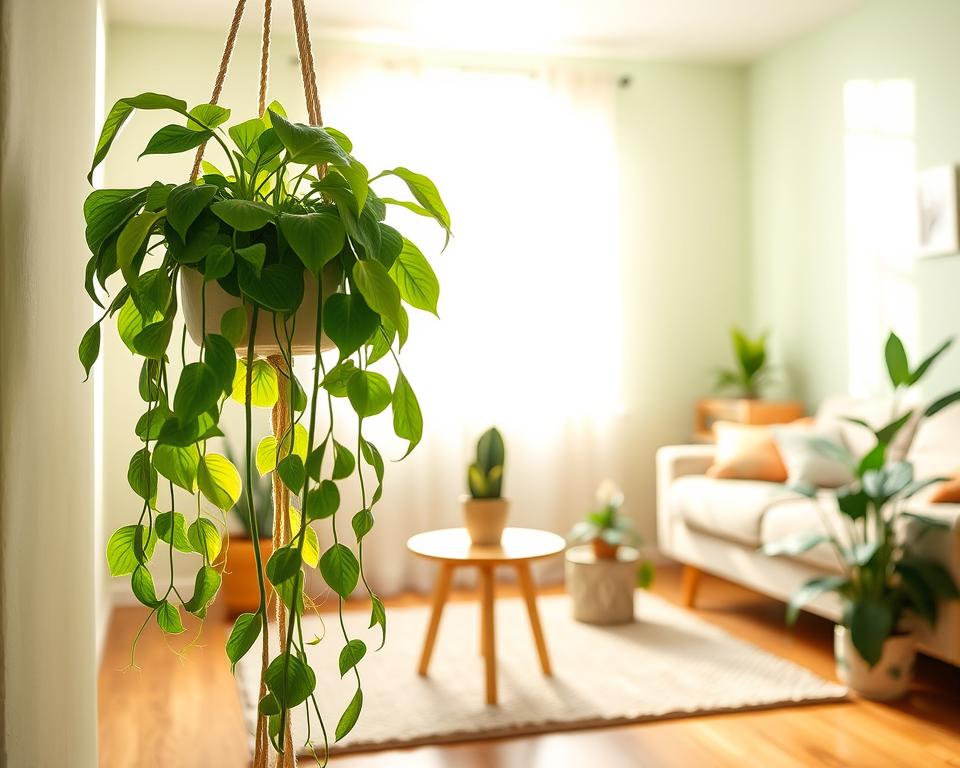
Many popular houseplants thrive without a sunny windowsill. This makes it easier to find easy apartment plants for rooms with limited light, small corners, or busy schedules.
This guide introduces seven beginner-friendly indoor plants, including hardy snake plants and leafy pothos. You’ll learn to check light, water carefully, and choose pots that protect roots.
Key Takeaways
- Match a plant to the light in your apartment.
- Start with a plant that suits your routine.
- Check soil before watering.
- Use pots with drainage holes to help prevent root problems.
- Check whether a plant is safe for pets before bringing it home.
How to Choose a Beginner-Friendly Apartment Plant
Start with your routine and available space. Consider the light, watering schedule, and whether the plant fits on a shelf or floor. Choose a plant that feels easy to care for, not like another chore.
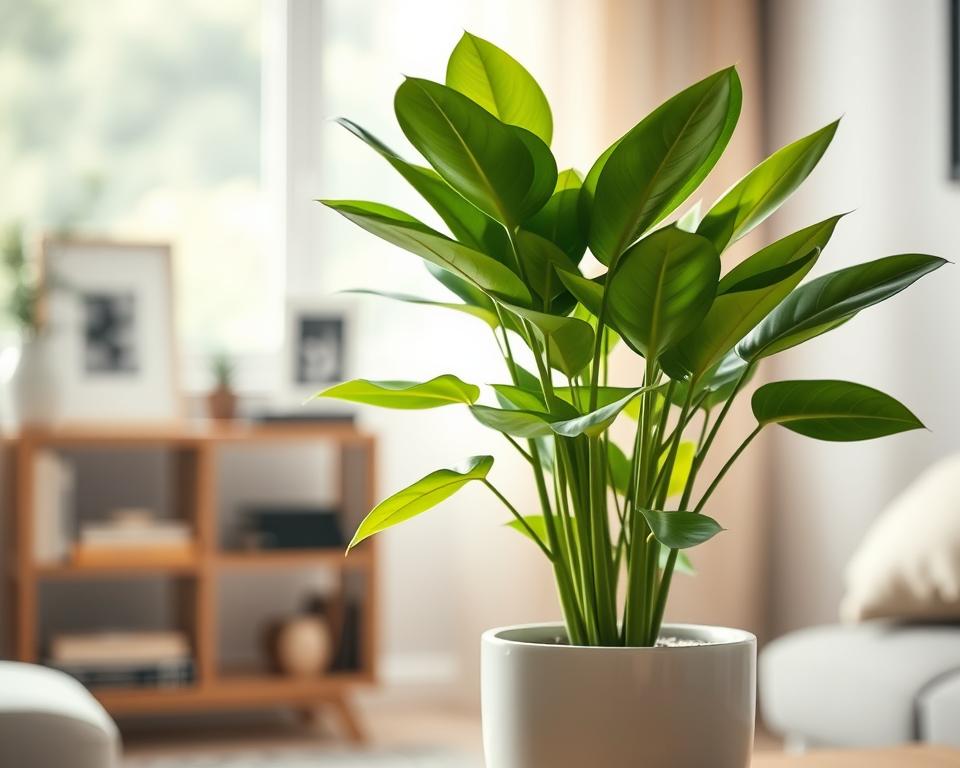
Check its care needs before buying. A low-maintenance ZZ plant may suit someone who wants a simple routine, but frequent-care plants may not fit. Read the label and choose one that fits your home and habits.
If you have pets, check whether the plant is safe for them. Start with one plant, learn its needs, and add more when you feel ready.
Check Your Apartment’s Light Before You Buy
Light can change within a few steps between windows. Check each room in the morning and afternoon before choosing a plant. Note where sunbeams fall and which areas stay bright without direct sun.
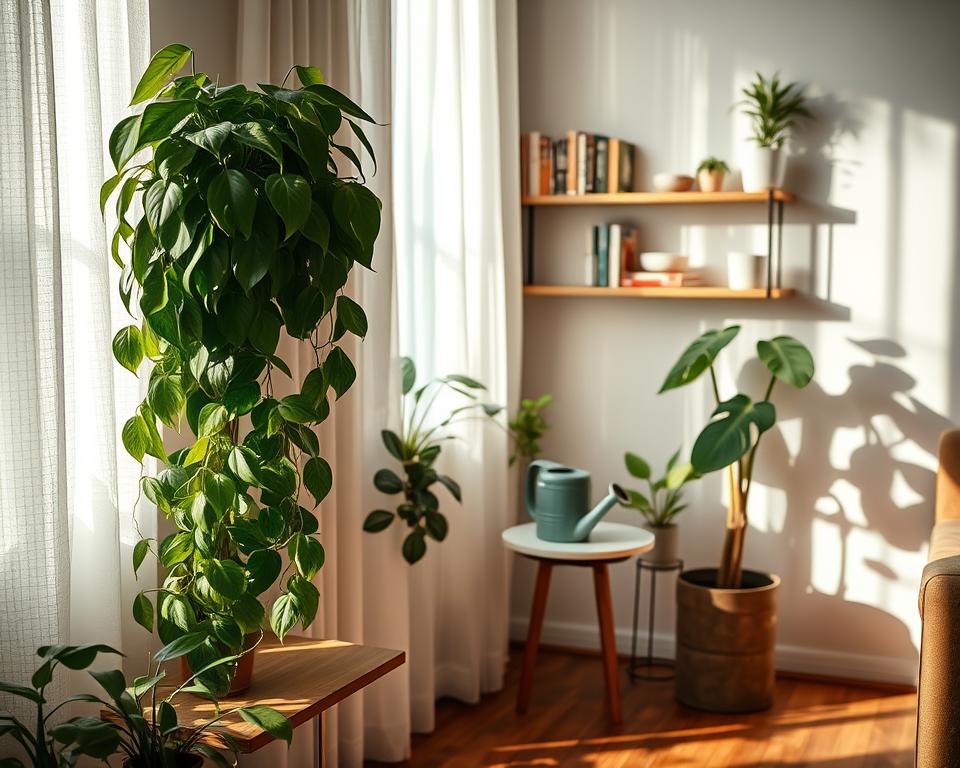
Many apartment plants thrive in bright, indirect light for foliage. A place near a sunny window may work when a curtain softens the rays. North-facing rooms often receive less light, so watch their brightness throughout the day.
Use this quick check to compare possible spots. Plant light needs vary, so read the care label before bringing one home.
| What you notice | Possible light level | What to check |
|---|---|---|
| Sunbeams land on the spot for hours | Direct light | See whether a sheer curtain can soften the sun. |
| The area is bright, but the sun does not hit it | Bright, indirect light | Compare the spot with the plant’s care needs. |
| The room looks dim for much of the day | Low light | Check for a brighter place near a window. |
Three Easy Plants for Low-Light Rooms
Dim rooms can support indoor plants, but low light is not the same as no light. Snake plants, ZZ plants, and pothos are common choices. Growth may vary with the light in your home.
Snake Plant
A shade-tolerant snake plant is a popular apartment choice. Watch its response, because a darker spot may slow its growth. Do not assume it will thrive far from a window.
ZZ Plant
The ZZ plant is another familiar choice for rooms with limited natural light. Check for healthy growth after placing it, and move it if it seems unhappy.
Pothos
Pothos can bring leafy color to an apartment. Its response depends on the room, so observe it over time. A shade-tolerant snake plant or pothos may suit your space, but both need some light to grow well.
Four Easy Plants for Bright, Indirect Light
A bright room supports many easy-care plants. Place them near a window, but protect delicate leaves from harsh midday sun. These four choices add color and texture to an apartment.
Spider Plant
Spider plants grow well in bright, indirect light and adapt to many homes. Let the top of the soil dry before watering. Their arching leaves look great on a shelf or in a hanging pot.
Baby Rubber Plant
Baby rubber plants have thick, glossy leaves and a compact shape. Give yours a spot with good filtered light. Water when the soil feels dry near the surface.
Jade Plant
Jade is a succulent that stores water in its leaves. It enjoys a bright spot and tolerates some gentle direct sun. For succulents for sunny windows, jade is practical; introduce stronger sunlight gradually.
Rubber Plant
Rubber plants make a bold statement with broad, shiny leaves. Place one near a bright window with filtered light, and rotate the pot sometimes for even growth. Jade, a choice among succulents for sunny windows, needs brighter sun than this leafy plant.
How Often to Water Apartment Plants
Indoor plant watering has no single schedule. Check the soil before using your watering can. If it feels damp, wait and check later.
Light, room temperature, pot size, and drainage affect how quickly soil dries. Check each plant’s soil instead of watering every plant on the same day. Use a pot with drainage holes so extra water can escape.
Choose Pots and Soil That Prevent Root Problems
Choose pots with proper drainage so extra water can escape. A drainage hole stops water from pooling around the roots. Place the pot on a saucer, then empty it after watering.
Use a well-aerated potting mix made for houseplants. It lets air and water move through the soil, supporting healthy roots. Do not pack the mix tightly when you repot.
Choose a pot only a little larger than the root ball. A much larger pot holds more wet soil, which can take longer to dry.
| What to check | What to choose | Why it helps |
|---|---|---|
| Pot base | One or more open drainage holes | Lets extra water leave the pot |
| Pot size | Just wider than the root ball | Helps soil dry at a steady pace |
| Potting mix | Loose mix labeled for houseplants | Allows air and water to reach roots |
Keep Your Plants Safe Around Pets
Before bringing home a plant, check its exact name with trusted pet-safety guidance. Common names may differ, so keep the label or take a clear photo. Ask your veterinarian if you are unsure whether it is among pet-safe apartment plants.
Keep unfamiliar plants where pets cannot reach them, and watch for chewing or digging. If your pet eats part of a plant, contact your veterinarian for advice. These checks help you choose pet-safe apartment plants with greater confidence.
Fix Common Beginner Plant Problems
Yellow leaves often mean too much water, while dry, crisp edges can show dry soil or harsh sun. Check the soil and light before changing your care routine. Make one small change at a time to see what helps.
For household pest prevention, inspect leaves and stems whenever you water. Wipe off dust with a damp cloth, and keep new plants apart from others for a short time. These simple habits help you find problems early.
| What you notice | What to check | First step |
|---|---|---|
| Yellow leaves | Soil that stays wet | Let the top layer dry before watering again. |
| Dry, crisp edges | Dry soil or strong direct sun | Check moisture and move the plant from harsh rays. |
| Dusty or marked leaves | Leaf surfaces and stems | Wipe leaves gently and keep up household pest prevention checks. |
Start With the Plant That Best Fits Your Space
Choose a plant based on your room, not only its appearance. For a dim corner, try a snake plant, ZZ plant, or pothos. A sunny spot with bright, indirect light may suit a spider plant, baby rubber plant, jade plant, or rubber plant.
Good small-apartment plant selection also matches a plant to your daily routine. Choose one that fits your space and watering habits. Use a pot with drainage, check the soil before watering, and keep potentially unsafe plants away from pets.
Start with one or two easy apartment plants, then watch how they respond to your light and care. If leaves droop or turn yellow, check the soil and light before changing your routine. A well-matched plant needs less care and is more likely to thrive.




